Showing posts with label Abuse Scandal. Show all posts

Wednesday, September 12, 2018

It Is Time To Close All the Seminaries


We are at a crisis point in the Church that rivals anything in our 2000 year history.  Yet another sex abuse report came out today, this one from Germany.
A study commissioned by the German Bishops Conference examined 3,677 cases of abuse allegedly perpetrated by clergy nationwide, German magazine Der Spiegel reported on Wednesday. The universities of Giessen, Heidelberg and Mannheim were involved in the research, which implicated 1,670 priests in sexual abuse spanning from 1946 to 2014.
This is a worldwide scandal in the Church.  It seems to be happening everywhere and has been for decades.  Most likely it has been happening much longer than that, but was much more easily covered up in the days before mass communication.

The question is, why is this happening?  What is the common denominator in these scandals?  What do all priests in the Catholic Church have in common?

They all went to seminary.

Sunday, January 27, 2013

Try Not To Judge The Priesthood By The Priest

Alec Guinness in "The Prisoner"
I recently saw a truly great movie with Sir Alec Guinness (a Catholic convert) made in 1955 that, up to now, I never even knew existed.  It is called "The Prisoner",  about a Cardinal in an unnamed Communist country who is arrested by the government and charged with treason.  If you wish to watch the movie online, you can do so on Youtube.   This is a very powerful movie, and I recommend you take 90 minutes to watch it.

As Wikipedia says, "The Cardinal was based on Croatian cardinal Aloysius Stepinac, who was a victim of a show trial staged by the communist regime led by Josip Broz Tito[2]and on Hungarian cardinal József Mindszenty, who was also the victim of the communist-staged show trial, while the communist regime was fronted by Mátyás Rákosi and Árpád Szakasits."  In the movie, the Cardinal is arrested immediately upon completing a High Pontifical Mass.

Here is the trailer for the movie:


The Cardinal in the movie is also a famous war hero who fought against the Nazis in WWII.  As a loyal Prince of the Church, he is adamantly anti-Communist, and therefore a threat to the government who wants to discredit and then execute him.  But to do this, they must get him to confess to crimes he did not commit.  The person put in charge of interrogating the Cardinal is someone who had fought alongside the Cardinal in WWII and knows him to be a man of high moral values.  He realizes that the usual threats of physical torture and even death will not work, so he resorts to psychological torture by using sleep deprivation, solitary confinement and generally trying to confuse his mind.  He eventually succeeds in convincing the Cardinal that he did indeed betray the people and the government, and because the Cardinal is such a good and holy man, he readily admits to crimes that he believes he committed but in reality did not.  At the end of the movie is a scene in which a prison worker looks at him with great disappointment, and Alec Guinness tells him, "Try Not to Judge the Priesthood By The Priest."

I think we would all do well to take this advice.  The priesthood, instituted by Jesus Christ, is a sacred vocation charged with saving souls.  We would all be doomed to eternal damnation without the Catholic priesthood.   Who could hear our confessions and absolve us from the sin which damns our souls, who could change bread and wine into the the life-giving sacrament of the Eucharist?  Who could confirm us?  If how we spend eternity is the most important question in our lives, and I believe it is, Catholic priests are the most important and invaluable people on the earth because we cannot attain eternal life in heaven without them.

Just as there seems to be an attempt in our world to destroy everything that is good and right and holy, such as the family, there has been and continues to be a war to stamp out the Catholic priesthood which is so indispensable to the salvation of our souls.  This war against priests, and in effect against the Church, played out in full force in the January 27 edition of the New York Times, as seen in an editorial written by Frank Bruni concerning an upcoming book by Garry Wills.  Mr. Wills calls himself Catholic but yet constantly rails against the Pope and the Magesteruim of the Church.  Both the book and this editorial are nothing less than diabolical in tone, and could have easily been dictated by the devil himself.   The editorial is entitled "Catholicism's Curse."

Mr. Bruni starts by telling us that he and Mr. Wills have nothing against priests.  Mr. Bruni says he has met many good priests who, according to Mr. Bruni, are good in spite of, and not because of, the Catholic Church:
“I HAVE nothing against priests,” writes Garry Wills in his provocative new book, “Why Priests? A Failed Tradition,” and I’d like at the outset to say the same. During a career that has included no small number of formal interviews and informal conversations with them, I’ve met many I admire, men of genuine compassion and remarkable altruism, more dedicated to humanity than to any dogma or selective tradition.
You know there is a "but" coming, and here it is:
But while I have nothing against priests, I have quite a lot against an institution that has done a disservice to them and to the parishioners in whose interests they should toil. I refer to the Roman Catholic Church, specifically to its modern incarnation and current leaders, who have tucked priests into a cosseted caste above the flock, wrapped them in mysticism and prioritized their protection and reputations over the needs and sometimes even the anguish of the people in the pews. I have a problem, in other words, with the church’s arrogance, a thread that runs through Wills’s book, to be published next month; through fresh revelations of how assiduously a cardinal in Los Angeles worked to cover up child sexual abuse; and through the church’s attempts to silence dissenters, including an outspoken clergyman in Ireland who was recently back in the news.
Mr. Bruni would definitely not agree with the advice given to us by Sir Alec Guinness and in fact, Mr. Bruni believes we must judge the priesthood by the priest.  I wonder if he feels that way about other institutions.   What about pedophiles who have been caught in police departments, teachers, government officials, the Protestant ministry, the Hasidic community, all at much higher rates than among Catholic priests?  Shouldn't we be judging these institutions by the same standards Mr. Bruni wants us to use with the Catholic priesthood?  The fact is that pedophilia is found everywhere in our culture and it is a very sad fact that this includes the Catholic Church, as Mr. Bruni does not hesitate to point out, and yes, bishops did mishandle many of these cases:
LET’S start with Los Angeles. Last week, as a result of lawsuits filed against the archdiocese of Los Angeles by hundreds of victims of sexual abuse by priests, internal church personnel files were made public. They showed that Cardinal Roger M. Mahony’s impulse, when confronted with priests who had molested children, was to hush it up and keep law enforcement officials at bay. While responses like this by Roman Catholic bishops and cardinals have been extensively chronicled and are no longer shocking, they remain infuriating. At one point Cardinal Mahony instructed a priest whom he’d dispatched to New Mexico for counseling not to return to California, lest he risk being criminally prosecuted. That sort of shielding of priests from accountability allowed them, in many cases across the United States, to continue their abusive behavior and claim more young victims.
Mr. Bruni continues on with a description of Cardinal Mahony's handling of abusive priests and then launches into an attack on the Vatican:
Church officials and defenders note that Cardinal Mahony’s gravest misdeeds occurred in the 1980s, before church leaders were properly educated about recidivism among pedophiles and before the dimensions of the child sexual abuse crisis in the church became clear. They point out that the church’s response improved over time. That’s true, but what hasn’t changed is the church’s hubris. This hubris abetted the crisis: the particular sway that abusers held over their victims and the special trust they received from those children’s parents were tied into the church’s presentation of priests as paragons.
And this hubris also survives the crisis, manifest in the way that the Vatican, a gilded enclave so far removed and so frequently out of step with the rest of the world, clamps down on Catholics who challenge its rituals and rules. Much of what these dissenters raise questions about — the all-male priesthood, for example, or the commitment to celibacy that priests are required to make — aren’t indisputable edicts from God. They’re inventions of the mortals who took charge of the faith.
I'm assuming Mr. Bruni would say it was hubris that caused Our Lord to choose an all-male priesthood in the Apostles.  Mr. Bruni also seems to reject Matthew 16:19 in which Our Lord said to St. Peter, our first Pope, "I will give you the keys of the kingdom of heaven; whatever you bind on earth will be bound in heaven, and whatever you loose on earth will be loosed in heaven."  No doubt Mr. Bruni would see this as the epitome of hubris and an "invention of mortals".

As an example of the hubris of the Catholic Church, Mr. Bruni tells us about the "injustice", as he sees it, that has been done to an Irish priest who is in active rebellion against the Magesterium of the Church:
And yet with imperious regularity, Vatican officials issue their relished condemnations. These officials are reliably riled by nuns, a favorite target of their wrath. And they’ve been none too pleased with an Irish priest, the Rev. Tony Flannery, 66, who was suspended from his ministry by the Vatican last year and informed, he recently said, that he could return to it on the condition that he publicly express his endorsement of a range of official positions that he had questioned, including the exclusion of women from the priesthood. Last Sunday he broke a long silence to say that the Vatican had threatened him with excommunication and to call its approach toward him “reminiscent of the Inquisition.”
Among the Vatican’s issues with him was his stated belief in a 2010 article that the priesthood, rather than originating with Jesus and a specially selected group of followers, was selfishly created later by a “privileged group within the community who had abrogated power and authority to themselves.”
Mr. Bruni now presents us with the fiction of Garry Wills, who asserts in his new book that the priesthood was not given to us by Jesus Christ, but an invention by mere mortals, and that the priesthood was actually opposed in the early Church. Mr. Bruni also feels that the Church needs to have a more democratic government:
That may sound like an extreme assertion, but the new book by Wills, a Pulitzer Prize winner who has written extensively about Christianity and the church, says that at the start, Christianity not only didn’t have priests but opposed them. The priesthood was a subsequent tweak, and the same goes for the all-male, celibate nature of the Roman Catholic clergy and the autocratic hierarchy that this clergy inhabits, an unresponsive government whose subjects — the laity — have limited say.
Mr. Bruni and Mr. Wills now completely toss out Vatican I, which said that the teachings of the Magesterium, which is guided by the Holy Spirit, are infallible:
“It can’t admit to error, the church hierarchy,” Wills told me on the phone on Thursday. “Any challenge to their prerogative is, in their eyes, a challenge to God. You can’t be any more arrogant than that.” 
Mr. Wills makes an outright attack upon the priesthood and Mr. Bruni agrees, trying to tell us that the abuse crisis proves that the Church and the world would be much better off without the Catholic priesthood:
“We Catholics were taught not only that we must have priests but that they must be the right kind of priests,” he writes in the book, which argues that priests aren’t ultimately necessary. “What we were supposed to accept is that all priesthoods are invalid ones except the Roman Catholic.”
That’s an awfully puffed-up position, and there’s a corresponding haughtiness in the fact that bishops can assign priests to parishes without any real obligation to get input or feedback from the parishioners those priests serve. This way of doing business in fact enabled church leaders to shuttle priests accused of molestation around, keeping them one step ahead of their crimes.
It has also helped to turn many Catholics away from the church, while prompting others to regard its leaders as ornamental and somewhat irrelevant distractions. They cherish the essence and beauty of their religion. They just can’t abide the arrogance of many of its appointed caretakers.
The arguments made in Mr. Bruni's editorial and Mr. Wills's book about the Catholic priesthood and the teachings of the Catholic Church are not only specious, but they are dangerous to our souls.  This is not to say that there are not problems within the church.  The church is filled with sinners.  We all have fallen natures and live in a fallen world.  We need spiritual guidance and correction, and we get it all the time from the Magesterium.  Certainly if the priests and bishops who now stand accused had put themselves entirely in line with the teachings of the Church, the abuse crisis would have never happened.

The Church is not the cause of the crisis.  It was and is caused by those who refuse to abide by the divinely inspired teachings of the Church.  To throw out the priesthood is truly to throw out the baby with the bathwater.  It is to quite literally throw away our eternal salvation.

We all must be very careful when we speak against priests.  From Catholictradition.org:
IN his epistle to the Christians of Smyrna, St. Ignatius, Martyr, says that the priesthood is the most sublime of all created dignities: "The apex of dignities is the priesthood." St. Ephrem calls it an infinite dignity: "The priesthood is an astounding miracle, great, immense, and infinite." St. John Chrysostom says, that though its functions are performed on earth, the priesthood should be numbered among the things of Heaven."
According to Cassian, the priest of God is exalted above all earthly sovereignties, and above all celestial heights-----he is inferior only to God. Innocent III says that the priest is placed between God and man; inferior to God, but superior to man. St. Denis calls the priest a Divine man. Hence he has called the priesthood a Divine dignity. In fine, St. Ephrem says that the gift of the sacerdotal dignity surpasses all understanding.
For us it is enough to know, that Jesus Christ has said that we should treat his priests as we would his own person: "He that heareth you, heareth Me; he that despiseth you, despiseth Me." Hence St. John Chrysostom says, that "he who honors a priest, honors Christ, and he who insults a priest, insults Christ." Through respect for the sacerdotal dignity, St. Mary of Oignies used to kiss the ground on which a priest had walked.
St. Francis
Yes, we have a troubled priesthood in many ways.  But have we contributed to it by not honoring our priests as they deserve?  They are here as representatives of Jesus Christ.  As quoted above and taken from Luke 10:16, Jesus Christ said:  "He that heareth you, heareth Me; he that despiseth you, despiseth Me."  We need to look beyond the priest as a man and see our Lord himself.  We need to keep in mind that the priest is here to save our souls.  If we were on a lifeboat in the middle of an ocean and that lifeboat was our means of salvation, we would treat it with great respect.  When our priests fall, it is not our job to condemn them. It is our job to pray for them, just as St. Francis did.  From catholic.org:
Francis was not a reformer; he preached about returning to God and obedience to the Church. Francis must have known about the decay in the Church, but he always showed the Church and its people his utmost respect. When someone told him of a priest living openly with a woman and asked him if that meant the Mass was polluted, Francis went to the priest, knelt before him, and kissed his hands -- because those hands had held God.
Try not to judge the priesthood by the priest. 

Credit:  http://pinterest.com/pin/436356651365237654/

Wednesday, September 12, 2012

Bishop: We Have to Err On the Side of Protecting Children

"If there's any, any possibility that the law has been broken, if there's any possibility that an act of abuse has occurred, whether recently or in the decent past, then we need to report it to the civil authorities. We should never hesitate.."
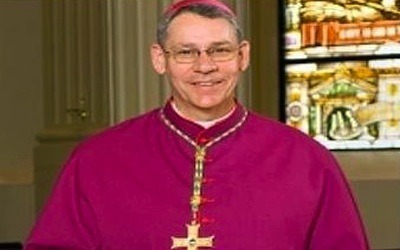
Bishop R. Daniel Conlon


Father Zuhlsdorf is attacking the wrong party
Father John Zuhlsdorf is still on a rant about the "unfair" treatment given to Bishop Robert Finn of Kansas City, who was convicted for not reporting one of his priests who was eventually found guilty of child pornography.  Father Z is specifically upset with the National Catholic Reporter, which he calls Fishwrap.   The Reporter has been calling for the removal of Bishop Finn following his conviction.  I'm not taking either side of that issue.  It's not for me to decide what if anything happens to Bishop Finn, although I will say that he has severely undermined his authority with this incident.

Father Z defends Bishop Finn against the Reporter with statements like this:
I don’t remember seeing National catholic Reporter‘s editorials demanding the resignation of Archbp. Rembert Weakland or Card. Mahony. They were into some truly deep problems, but there was no high dudgeon from NCR about them. 
Father Z really should know better.  You don't defend the bad actions of one person by pointing to even worse actions by another.  That's just a cheap shot.  Plus, who cares what the National Catholic Reporter has to say.  The fact is, Bishop Finn screwed up, and now he has to pay the price.


Should the rant be against
"Fishwrap" or Bishop Finn?
Ah, but Father Z will not admit just how serious this matter is.  He tries to shake it off as no big deal.
Bp. Finn got what we can only describe as a hand-slapping by a court. He received suspended probation the record of which is then to be expunged from his record. If what Finn did was truly a massive crime, would the court have done this?
Father Zuhlsdorf does not tell us that the bishop is required as part of his sentence to start a training program for diocesan employees in detecting early signs of child abuse, and in what constitutes child pornography and obscenity. He must also create a fund of $10,000 to pay for victims’ counseling. Bishop Finn and the diocese still face 27 civil suits, 4 of them involving Father Ratigan.

But Father Z, does it really matter what the court says?  The fact is, Bishop Finn tried to hide the wrongdoings of one of his priests.  When he reprimanded the priest and put restrictions on him, Bishop Finn did not include any kind of supervision.    Father Ratigan promptly violated Bishop Finn's regulations by being around children, and Bishop Finn never checked on him.  Father Ratigan was invited to a parishioner's house for dinner, and he took pictures under the table and up the skirt of the daughter of the parishioner. This is not a non-incident as you make it out, Father Zuhlsdorf.   Father Ratigan is now awaiting his sentencing.

Father Z ends his rant with this:
The editors hate Bp. Finn, bishop of the diocese where their offices are. They hate him with a personal hatred, unhinged animus. I think they are actually happy that the diocese had to spend piles of money on this, because, in the end, it hurt Bp. Finn. They are inflating what the court recognized as something so vaporous as to require that even the record of it be expunged, and they are dancing around it with pikes and torches.
Again, I can only say, who cares what the National Catholic Reporter has to say?  That doesn't change the facts of this case.  Bishop Finn received a just sentence.  And you are absolutely wrong, Father Z, the court did not see this as "something so vaporous as to require that even the record of it be expunged."  The court obviously believes that Bishop Finn has learned his lesson and is being very lenient towards him, and I commend the judge in this case for that.  Yes, the probation is suspended if Bishop Finn fulfills the terms imposed on him.  He did not get off scott free as Father Z implies.  The conviction may be legally expunged in the eyes of the law, but it will not be expunged in the court of public opinion.  This will always be used to persecute the church.

One person who seems to be in stark disagreement with Father John Zuhlsdorf is Bishop R. Daniel Conlon, chairman of the U.S. bishops' Committee on the Protection of Children and Young People.  This article is from Fishwrap, as Father Z affectionately calls the National Catholic Reporter, so Father Z probably won't pay any attention to it.  Nonetheless, Bishop Conlon did make these statements, and it is well for all to heed them.  As Bishop Conlon said,
I think what this case brings up is that we always have to err on the side of caution -- we have to err on the side of protecting children. If there's any, any possibility that the law has been broken, if there's any possibility that an act of abuse has occurred, whether recently or in the decent past, then we need to report it to the civil authorities. We should never hesitate.
Here is the interview from Fishwrap, as Father Z calls them (NCR questions in blue):

US bishops' point man on sex abuse addresses Kansas City case
Sep. 11, 2012
By Joshua J. McElwee [1]

Joliet, Ill., Bishop R. Daniel Conlon, chairman of the U.S. bishops' Committee on the Protection of Children and Young People, is pictured in Rome in 2011. (CNS/Paul Haring)

In the wake of the first conviction of a Catholic bishop in the decades-long clergy sex abuse crisis, bishops throughout the country have to recognize they are accountable to their own people for their actions to protect children, the bishop who heads the U.S. bishops' committee tasked with advising their national conference on sexual abuse said Tuesday.

Bishops also have to be "firm" in applying the procedures that the body of bishops adopted 10 years ago to prevent child abuse, said Joliet, Ill., Bishop R. Daniel Conlon, the chair of the U.S. bishops' committee for the protection of children and young people.

Conlon spoke to NCR by phone from the sidelines of a meeting of the U.S. bishops' administrative committee. He addressed last week's conviction [2] of Kansas City-St. Joseph, Mo., Bishop Robert Finn for failing to report suspected child abuse.

In a non-jury trial Sept. 6, Finn was found guilty of one count of failing to report suspected child abuse, a misdemeanor in the state of Missouri, making him the first sitting U.S. bishop to be convicted of a crime stemming in the decades long sex abuse scandal.

During Tuesday's interview with NCR, Conlon discussed the impact of that conviction on the continuing progress of the national church to address sex abuse, 10 years after the U.S. bishops' adopted the Charter for the Protection of Children and Young People.

"We've got a long, long way to go," Conlon said. "But I think that diligent application of the Charter is essential. That doesn't mean that there's going to be 100 percent perfection because we're still human beings.

"And we have 190 dioceses in the United States. I can't help the fact that if there is a flaw in one place, that it's counted against one of us. I can't help that."

Following is NCR's interview with Conlon, edited slightly for context and length.

NCR: How do you see the U.S. bishops' conference addressing concerns about how the church handles reports of abuse in the light of Finn's guilty verdict?

Conlon: I think what this case brings up is that we always have to err on the side of caution -- we have to err on the side of protecting children. If there's any, any possibility that the law has been broken, if there's any possibility that an act of abuse has occurred, whether recently or in the decent past, then we need to report it to the civil authorities. We should never hesitate.

In the Kansas City case, we know that Bishop Finn never consulted his diocesan review board about a priest in possession of child pornography. How is that being dealt with by the national conference? What happens when a bishop doesn't report it to a review board? 
I think we have to make a distinction between what is printed in the charter -- and that, of course, is what we have bound ourselves to -- and what is good practice. The charter states that diocesan review boards are "to advise the diocesan/eparchial bishop of its assessment of allegations of sexual abuse by minors and its determination of a cleric's suitability for ministry."

That's what it says. Not -- it seems to me by interpretation, and this is just a matter of interpretation -- that if the review board is going to fulfill its responsibility as laid out in the charter to advise the bishop in his assessment of allegations of sexual abuse, then it has to be notified that there's been an allegation.

Again, as I said in terms of reporting to civil authorities, likewise in reporting to the diocesan review board. The bishop has to, it seems to me, report any allegation of abuse to the review board so that it can fulfill its obligation of advising them. And I don't think the bishop should put a doubt before that obligation to bring the matter to the review board.
In cases like Kansas City, how do you see the issue of accountability for bishops who don't follow the guidelines in the charter? What should happen to them?
The responsibility that we have to deal properly with allegations of abuse, to try to create a safe environment for young people is part of our overall responsibility for pastoral care of God's people.

In looking at that general responsibility, the first person to whom we are accountable is Christ, who is the good shepherd, and we're called to act in his place. That's a very serious responsibility to the Lord himself.
Secondly, a bishop is accountable to the representative of Christ who calls a bishop to that office of bishop and that's the pope. So each bishop is directly on earth accountable to the pope.
And then a bishop, I think, is also accountable to the people of the diocese. And has to be attentive to what people say, what he hears people say -- the priests, the deacons, the laypeople in the diocese. He has to listen to what people say in terms of how they feel he is fulfilling his office.   [I think it's safe to say that Bishop Finn fell down on the job on all three points.]
In terms of accountability on the issue of child abuse and child protection, all of us, every day, have to ask ourselves if we are being accountable to all three points.

In instances like this, is there any accountability for bishops from the members of the U.S. bishops' conference or does everything have to come from Rome?
There definitely is no accountability to the conference of bishops. There is an accountability to the college of bishops, the whole college of bishops. But the conference of bishops has no authority over individual bishops and the individual bishop has no accountability to the conference other than a sense of fraternal responsibility.

I mean, I pray for the bishops of the United States, and I am concerned about my brother bishops across the country, that sort of thing, but we have no line responsibility for other bishops. It's more the spiritual, fraternal kind of responsibility.

How do you address the questions of trust here? Even with the changes since adoption of the charter, laypeople in parishes and schools around the country have to trust that their bishop will report these things to the review board or to civil authorities, should they come up. How do you address that issue after the verdict in Kansas City?
I think sometimes in our human relationships, we have to presume trust. I think that, for example, when two people marry, they have to presume trust in one another. I think that when a bishop is appointed to a diocese, the people have to presume that they can trust him to carry out his responsibilities.
And if they begin to see that he fails in that trust, then they're going to lose trust. And just as spouses may lose trust in one another as they see each other fail. But they don't start out with the presumption of not trusting.
And I think that it's important to treat each human being on his or her individual terms. I think it's wrong, for example, for a husband or wife to say, "I'm not going to trust you because I know there are a lot of husbands and wives who are not trustworthy."

So I don't think we should treat all bishops as untrustworthy because one or two or three or 10 or 20 have failed to fulfill their responsibilities in one form or another. But this issue of child abuse is extremely important. A lot of human lives have been devastated by sexual abuse within the church.

So I believe that bishops have an extraordinary level of responsibility to deal with these allegations. At the same time, there is a lot of prudential judgment that has to be exercised. And I have discovered over the years that no two cases ever seem exactly the same.

But the basic responsibility of reporting an allegation to the civil authorities and cooperating with the civil authorities in any investigation that they undertake is very straightforward. It's a very simple obligation. And I think that people should be able to assume that the bishop or anyone who is operating directly under the authority of the bishop is going to make those reports.

You were reported in recent days as saying that the church's credibility on this issue was "shredded." [3] In the light of hoping that there's trust there, how can the bishops address that trust when their credibility seems to be so devastated over the past few years?

I was speaking at a national conference of safe environment coordinators and victims' assistance coordinators, so I wasn't addressing bishops.

That particular phrase, "our credibility is shredded," was specifically in a part of the talk where I was suggesting that the victims' assistance coordinators and safe environment coordinators might be of some help to the bishops in putting the work that they're doing out to the media. I was trying to say that the bishops' credibility with the media is shredded.

It is different. I was not saying that our credibility in general is shredded. I'd like to say that we still have some credibility with Catholic people and maybe in some other quarters as well. But we do have a credibility issue, there's no question about that.
On the other hand, I think we have made considerable progress. There's a recent Pew study that suggests we've made some progress in not only creating a safe environment for young people and dealing effectively with incidents of abuse, but in terms of our credibility.

But we've got a long, long way to go.  [And Bishop Finn has made it that much harder.]  And I think that in addition to the usual spiritual assistance that we have to count on -- and that's very important, we do have to count on prayer and the Holy Spirit to help us -- but I think that diligent application of the charter is essential. That doesn't mean that there's going to be 100 percent perfection because we're still human beings.

And we have 190 dioceses in the United States. I can't help the fact that if there is a flaw in one place, that it's counted against one of us. I can't help that.

But we have to try to prevent that by doing the best we can. But I don't think we're ever going to get to a point where there are not going to be failures. No institution in the world, including the Catholic church, even with the divine assistance that we have, is going to be perfect.

That doesn't mean that we should excuse our mistakes or that we should not be held accountable for our mistakes. I think continuing to be firm about applying the norms of the charter is a very important step.
Is there anything that we didn't get to that you'd want to say about this issue?
Just to be clear, I don't think that there's much room for making excuses for failures.  [Maybe Bill Donohue and Father Z should heed this and stop trying to excuse and downplay the actions of Bishop Finn.] To acknowledge that there are going to be failures is simply dealing with the reality of life. But, at the same time, I want to be clear that I'm not trying to make excuses. And I do think that bishops, in this area of child abuse, have to expect a very high level of accountability.
Accountability from civil and church authorities?
Yes. But all things in proportion.

[Joshua J. McElwee is an NCR staff writer. His email address is jmcelwee@ncronline.org.]
 
I believe Father Z is completely wrong in this matter, and  Bishop Conlon would also seem to be of that opinion.  Bishop Finn did not mean any harm, but he did not take the matter seriously enough.  He did not take into account the risk that Father Ratigan was to children and the scandal that this could cause to the church.  Proverbs 28:13 says:  "If you hide your sins, you will not succeed. If you confess and reject them, you will receive mercy."  Bishop Finn tried to hide the sins of his priest, and now the entire church is paying the price in every way imaginable.  It never pays to hide our sin, it will always find us out.

Tuesday, September 11, 2012

The Catholic League: With Friends Like This, Who Needs Enemies?

Are Bill Donohue and the Catholic League trying to destroy the Catholic Church?  I recently posted on Bill Donohue's defense of  Father Groeshel's comments defending pedophiles.  Donohue's defense of these, at best, inane comments by Father Groeschel actually hurts the church more than it helps.  Both the Franciscan Friars of the Renewal and the Archdiocese of New York did mea culpa's on behalf of these despicable comments, as well they should.  But in Donohue's eyes, it seems, a Catholic priest can do no wrong. 

Now the Catholic League has run to the defense of Bishop Robert Finn of Kansas City who was convicted for failing to report child pornography found on the computer of one of his diocesan priests.  The priest, Father Shawn Ratigan, had taken hundreds of pictures of the crotches of children, including one of a baby with his diaper pulled back to expose his genitals.  The pictures were found on his computer when he took it in for repair.  As the New York Times reported:
The bishop had advance warning about Father Ratigan, well before pornography was discovered on the priest’s laptop. Julie Hess, the principal of the parochial school, next door to St. Patrick Parish where Father Ratigan served, had sent a memorandum in May of 2010 to the diocese, which said:  
“Parents, staff members, and parishioners are discussing his actions and whether or not he may be a child molester. They have researched pedophilia on the Internet and took in sample articles with examples of how Father Shawn’s actions fit the profile of a child predator.”  
Children in the diocese’s schools are taught about appropriate boundaries between adults and children in an abuse-prevention education program called Circle of Grace. Ms. Hess said that while she was inclined to believe that Father Ratigan’s behavior amounted to nothing more than “boundary violations,” other adults were alarmed about specific events: Father Ratigan had put a girl on his lap on a bus trip, attempted to “friend” an eighth grader on Facebook, and had an inappropriate “peer to peer” relationship with a fifth-grade girl. On a children’s group excursion to Father Ratigan’s house, parents spotted hand towels shaped to look like dolls’ clothes, and a pair of girls’ panties in a planter in his yard.

The bishop told Father Ratigan in June 2010 that “we have to take this seriously.” But the testimony showed that the bishop, too, perceived the concerns simply as “boundary issues.”
Father Shawn Ratigan
It was shortly before Christmas in 2010 that Father Ratigan brought his computer in to be repaired by a computer technician.  The tech found the pornography, and he took the laptop to a deacon, who in turn took it to Msgr. Robert Murphy, the second in command to Bishop Finn.  Msgr. Murphy gave the laptop to Julie Creech, a technology staff member at the diocese.  According to the New York Times:
Ms. Creech found “hundreds of photographs,” according to the testimony, many taken on playgrounds, under tables or in one case, while a girl was sleeping. Many pictures did not show faces — only close-ups of crotches. Ms. Creech wrote a report for her superiors noting that only four or five of the hundreds of pictures appeared to have been downloaded from the Internet: “the rest appeared to have been taken with a personal camera.” 
As the Times tells us:
Both Bishop Finn and Monsignor Murphy, as ministers, were required by law to report suspected child abuse to the civil authorities. But they were also required to report under policies that the American bishops put in place 10 years ago at the height of the scandal — policies that now hold the force of canon law.
Further, according to the Times:
Nevertheless, even before getting the laptop, Monsignor Murphy had already consulted with a Kansas City Police Department captain who served on the diocese’s Independent Review Board. The Graves report said that the captain, Rick Smith, recalled being told by Monsignor Murphy that the diocese had found only one nude photograph, that it was of a member of Father Ratigan’s family, and that it was not a sexual pose. Monsignor Murphy said he did not remember telling the captain those things. Their recollections also differed on what the captain had said about whether the photograph constituted pornography.
Father Ratigan then attempted suicide by driving his motorcycle into a closed garage. 

Instead of directly dealing with this situation and reporting it to the proper authorities, Bishop Finn reassigned Father Ratigan and told him he must stay away from children and must not use computers.
The bishop assigned Father Ratigan to serve as a chaplain to the Franciscan Sisters of the Holy Eucharist, in Independence, Mo. He placed seven restrictions on the priest, including not using computers and avoiding all contact with children. But the bishop allowed him, on a “trial” basis, to celebrate Mass for youth groups at the prayer center that the sisters ran.

Over the next five months, Father Ratigan, who is now 46 attended a sixth-grader’s birthday party, co-celebrated a child’s confirmation, communicated with children on his Facebook page, hosted an Easter egg hunt and attended a parade, the testimony recounts. Invited to dinner at the home of parishioners, he was caught taking photographs, under the table, up their daughter’s skirt, according to a federal indictment of Father Ratigan.

Neither the bishop nor any church official told church members or Father Ratigan’s large extended family — which includes many children — that the priest had been ordered to stay away from children, Darron Blankenship, a brother-in-law of Father Ratigan and a police officer who has handled child abuse cases, said in an interview on Friday.

“For somebody that was under restrictions, he had free rein,” Officer Blankenship said. “He just went and did what he wanted.”   
What was Bishop Finn's reactions when he found out that Father Ratigan was violating his rules?
Bishop Finn and Monsignor Murphy learned about some of Father Ratigan’s violations of his restrictions. “I will have to tell him,” Bishop Finn wrote in an e-mail to the psychiatrist, “that he must not attend these children’s gatherings, even if there are parents present. I had been very clear about this with him already.”
Finally, Msgr. Murphy took matters into his own hands and reported Father Ratigan to the police on May 11, 2011 when Bishop Finn was out of town.  Ratigan was arrested a week later and convicted in August of possessing child pornography.

This is all quite scandalous, and I think is very clear that Bishop Finn was guilty of trying to cover this up.  Yet it seems that Bishop Finn still didn't get it.  As the Times article tells us:
Bishop Finn and the diocese were indicted by a grand jury in October 2011. Monsignor Murphy was given immunity for cooperating with the prosecution. He testified that he turned Father Ratigan in because he had grown concerned that he was truly a pedophile. The monsignor said that when the bishop learned he had turned in Father Ratigan, “It seemed he was angry.”

After Father Ratigan was arrested, Bishop Finn met with his priests. Asked why Father Ratigan was not removed earlier, the bishop replied, according to the testimony, that he had wanted “to save Father Ratigan’s priesthood” and that he had understood that Father Ratigan’s problem was “only pornography.”
* * *
 
Father John Zuhlsdorf
And now here comes the Catholic League running to defend Bishop Finn and demonize those who told the story.  I am further upset by the fact that I saw this story on Father Zuhlsdorf's blog applauding the actions of the Catholic League in defending Bishop Finn.  The Catholic League wrote:  "we find the chorus of condemnations targeting Bishop Finn to be as unfair as they are contrived" to which Father Z commented:  "Do I hear an "Amen!"?.  No, Father Z, you do not hear an "Amen!" from me.
 
Here is the posting from The Catholic League:

ASSESSING BISHOP FINN’S GUILT
September 7, 2012 by admin
Filed under
Latest News Releases

Catholic League president Bill Donohue comments on a judge’s decision yesterday finding Kansas City-St. Joseph Bishop Robert Finn guilty in a case involving Father Shawn Ratigan:

Let’s get rid of some myths. Bishop Finn was not found guilty of a felony: he was found guilty of one misdemeanor, and innocent of another. The case did not involve child sexual abuse—no child was ever abused, or touched, in any way by Father Shawn Ratigan. Nor did this case involve child pornography [!!!!!!]. Here’s what happened.

On December 16, 2010, a computer technician found crotch-shot pictures of children, fully clothed, on Ratigan’s computer; there was one that showed a girl’s genitals exposed. The next day Ratigan attempted suicide. The Vicar General, Msgr. Robert Murphy, without seeing the photos, contacted a police officer about this matter. The officer, after consulting with another cop, said a single photo of a non-sexual nature would not constitute pornography. After a few more of the same types of photos were found, an attorney rendered the same judgment: they were not pornographic.

Finn then asked a psychiatrist to evaluate Ratigan. The bishop was given the judgment of a professional: the priest was not a risk to children (he was diagnosed as suffering from depression). Finn then placed restrictions on Ratigan, which he broke. When it was found that Ratigan was again using a computer, upon examination more disturbing photos were found. Murphy then called the cops (Finn was out of town) and a week later Ratigan was arrested. Yesterday, Finn was found guilty of one misdemeanor of failing to report suspected child sexual abuse.

The Catholic League supports harsh penalties for child sexual abusers, and for those who cover it up. But it also supports equal justice for all, and given what we know of what is going on in many other communities, religious as well as secular, we find the chorus of condemnations targeting Bishop Finn to be as unfair as they are contrived.

We would be remiss if we did not mention that only two newspapers in the nation put this story on the front page: the Kansas City Star, understandably, and the New York Times.
* * * 
Donohue is obviously telling the facts to fit his defense of Bishop Finn.  How can Donohue possibly say "The case did not involve child sexual abuse—no child was ever abused, or touched, in any way by Father Shawn Ratigan. Nor did this case involve child pornography."  The pictures were definitely sexual in nature.  Of and by themselves, the pictures constitute abuse.  This would be considered a mortal sin in the Catholic Church and unless confessed, the sinner would be in danger of hell fire.  The very fact that Father Ratigan tried to kill himself shows the extent of his problem.  Bishop Finn was wrong in trying to cover up Father Ratigan's actions. 

To attack the media for reporting this story instead of looking at the real guilty parties shows that Bill Donohue and the Catholic League are no more than partisan shills.  When we are sick, we need a doctor who tells us what is wrong, not someone who smiles in our face and says everything is okay when in fact we are riddled with cancer.  As far as I'm concerned, Bill Donohue and the Catholic League have lost all credibility.

And what's up with Father Zuhlsdorf supporting Donohue?  It's interesting that there are no comments to Father Z's post on this matter.  Did no one care to comment, which is highly unusual for Father Z's readers, or maybe the comments weren't so supportive and he deleted them?

Bill Donohue and, by extension Father Zuholsdorf with his endorsement of Dononhue's comments, have given ammunition to the enemies of the Church.  Bishop Finn was wrong, pure and simple, in his actions.  He needs to be called out for what he did, and the conviction he received was right and just. Bishop Finn not only violated civil law with his cover up, he also violated the ruling of the Bishops. To defend his actions is unconscionable, and both Donohue and Father Z need to be called on it.

Hopefully Bishop Finn's conviction on covering up child abuse will cause all bishops to think twice before they try to cover up the wrong doings of priests. 

Is there anyone out there we can trust?

   
Related Posts  0