Saturday, December 15, 2012

A Letter to President Barack Obama

Dear President Obama,

I, like millions of other Americans and people around the world, was completely horrified at the mass murder that took place in an elementary school in Newtown, Connecticut.  It is hard to fathom the depth of evil that it takes to ruthlessly gun down a group of young, innocent children whose only crime was being in the wrong place at the wrong time.  My heart absolutely breaks for the parents, family and friends of these children, as well as for the other victims of these evil acts.  I can't even begin to know how to deal with something as tragic as this.

I watched the short speech you gave in reaction to this terrible shooting, and you did seem to be genuinely moved by the horror of this situation.  Your comment - "The majority of those who died today were children — beautiful, little kids between the ages of 5 and 10 years old. They had their entire lives ahead of them — birthdays, graduations, weddings, kids of their own" - was especially poignant.   

We all mourn the evil, tragic way in which these children died.   As you said, Mr. President, they had their entire lives ahead of them and it is a terrible thing that it was all taken away from them in such a gruesome manner.  But there are thousands of other children who are killed in our nation every day in even more gruesome, almost unimaginable ways.  And not only has our government legally sanctioned the murder of these most vulnerable, innocent lives, but you, Mr. Obama, have personally promoted this as a fundamental right, as you said on January 22, 2012:
As we mark the 39th anniversary of Roe v. Wade, we must remember that this Supreme Court decision not only protects a woman’s health and reproductive freedom, but also affirms a broader principle: that government should not intrude on private family matters. I remain committed to protecting a woman’s right to choose and this fundamental constitutional right.
Mr. Obama, here is a picture of what you say is a "fundamental constitutional right":


You called the murder of the innocent children in Connecticut a "heinous crime," and said you felt "overwhelming grief" at this horrible loss of life.  But if any of these children in Connecticut had been killed while they were still in their mothers' wombs, you would have applauded their murders as a "fundamental constitutional right."

You deplore the killing of these children by gunfire and said your heart was "broken", but you would have completely condoned their murder in the womb by being burned alive with saline solution or being torn apart limb by limb.  At the time of their births, you would have condoned a doctor delivering alive all but their heads from their mother's wombs and then murdering them by puncturing the base of their skull and crushing their heads.  And if somehow these children would have survived their attempted murder while in the womb, you would have insisted that they be given no medical care and left to die.  Knowing this makes it somewhat difficult to accept your statement that you and Michelle would "hug our children a little tighter and we’ll tell them that we love them, and we’ll remind each other how deeply we love one another."   

Mr. Obama, you also said in your statement, "These children are our children."  But you are the one who told us that you would fully support the deliberate murder of your own grandchildren because you would not want your daughters to be "punished with a baby" if they "made a mistake":


I'm sorry, Mr. Obama, but the words in your statement regarding the murders in Connecticut rang hollow and hypocritical.  You have never met an abortion you didn't like.  You have promoted the intentional killing of innocent life in the womb in every way possible.  You want young girls to have abortions without even notifying their parents.  You support paying for our military personnel to have abortions.  You have promoted and paid for abortions around the world.  You are persecuting the Catholic Church for their stand against abortion-inducing birth control.  As your own words tell us, you even support the killing of your potential grandchildren.

Mr. Obama, you told us that you don't even know when we "get human rights", as asked by Rick Warren:


Mr. Obama, as you said in your statement, the children murdered in Connecticut "had their entire lives ahead of them."  But so do the children in their mothers' wombs.  They, too, have "birthdays, graduations, weddings, kids of their own" to look forward to.  Yet you and all who think like you feel it is a fundamental constitutional right to take all of that away from the most vulnerable of our citizens.  You said "our hearts are broken today--for the parents and grandparents, sisters and brothers of these little children" in Connecticut.  Well, my heart breaks every time I pray in front of one of those killing fields called abortion centers, and I see young women going in, with your full support, to have their babies murdered.

I will hold the murder victims in Connecticut and their families and friends in my prayers.  But I also pray for the victims of abortion and their families and friends.  I will pray that somehow, someway, you, Mr. President, will see that there is no difference between killing a child while he lies peacefully in his mother's womb or killing him several years later while he sits in a classroom.  I will pray that you will see that  there is no difference between killing a child by using a gun or by using an abortionist's tools.  A six year old child is the same child who grew in his mother's womb from the time of his conception.  Murder is murder, it is the taking of innocent life, no matter how or when it takes place.

Mr. Obama, let us mourn the loss of these innocent young children and the adult victims as well in Connecticut, but let us also mourn the "heinous murder" of the 60 million American children who have been legally killed in their mothers' wombs since 1973.


Tuesday, December 11, 2012

Pope Benedict XVI: Man loses himself without God


Let us pray that all find in Christ the meaning of life and the foundation of true freedom: without God, in fact, man loses himself. The testimonies of those who have gone before us and have dedicated their lives to the Gospel confirm it forever. It is reasonable to believe our existence is at stake. It is worth spending oneself for Christ, He alone satisfies the desires of truth and of goodness rooted in the soul of every man: now, in the time that passes, and in the endless day of blessed Eternity.
Pope Benedict XVI

Pope Benedict XVI has continued his series of Wednesday audiences regarding The Year of Faith and continues to give great insight into what faith is and what it means in our lives. In a talk given on November 21, the theme of his address was that it is through faith we come to knowledge not only of God but also of ourselves.

The Holy Father also made a rather startling statement: "It is reasonable to believe our existence is at stake." This should cause us all to truly listen to His Holiness' words and take them to heart. Faith is about our very existence.

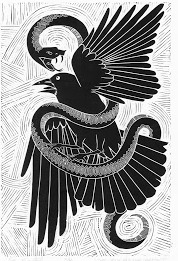
There is an Aesop Fable entitled the "The Crow and the Serpent" which I believe illustrates the statement made by His Holiness:  A crow in great want of food saw a Serpent asleep in a sunny nook, and flying down, greedily seized him. The Serpent, turning about, bit the Crow with a mortal wound. In the agony of death, the bird exclaimed: “O unhappy me! who have found in that which I deemed a happy windfall the source of my destruction.”

'I have found in that which I deemed a happy windfall the source of my destruction."  How often has this been true for us individually and for the entire world?  How often have we told ourselves if I can just get that particular job, buy that house or car, marry that person, make this amount of money, then I will be fulfilled and happy.  But when we actually achieve these goals, we far too often find that not only are we not fulfilled, but these very things we worked so hard to achieve are destroying our lives.   How many times have political leaders, and most certainly all dictators, come into power promising to be our saviors and in reality turned out to be the ones who cause misery and suffering?  All addictions - from drugs and alcohol to work or even a personal relationship - start out as pleasurable and something that will bring deep joy and meaning to our lives, and end up instead wreaking great havoc.

So is there anything in this world that will not become the "source of our destruction"?  This is in essence the theme of Pope Benedict's talk on November 21 in Rome when he continued in his series regarding the Year of Faith.  Pope Benedict explains to us that "without God, in fact, man loses himself."  The Holy Father shows that in order for anything in this life to be successful, it must be centered around faith, which is our relationship with God.  Anytime our lives are not centered on our Creator, we are walking a destructive path.  As the Pope has explained in earlier talks, it is through faith that we have a relationship with God, but it is a relationship that can only be initiated by God.  Faith is a gift we receive from our Creator and not something we can manufacture on our own.  This makes us completely dependent upon our merciful God, who always stands ready to pour His Love out upon us.  Our Lord told us, as recorded in Matthew 11:28-30:
Come to me, all you that labour, and are burdened, and I will refresh you. Take up my yoke upon you, and learn of me, because I am meek, and humble of heart: and you shall find rest to your souls. For my yoke is sweet and my burden light.
The Holy Father began his November 21 talk by describing the joy, liberation and peace that comes from believing in and communicating our faith.  Is is faith that "enhances, refines and elevates what is true, good and beautiful in man."  It is only through faith - an encounter with the Great God - that "man comes to know who God is and, in knowing him, discovers himself, his origin, his destiny, the greatness and dignity of human life".  Rodney King gave us the famous question, "Why can't we all just get along?"  The simple answer is that unless God is at the central core of our lives, nothing will work:
We go forward in this Year of Faith, bearing in our hearts the hope of rediscovering how much joy there is in believing and of finding the enthusiasm to communicate to all the truths of the faith. These truths are not a simple message about God, a piece of information about Him. Instead, they express the event of God's encounter with men, a salvific and liberating event, that fulfills the most profound aspirations of man, his desires for peace, brotherhood and love. Faith leads to discover that the encounter with God enhances, refines and elevates what is true, good and beautiful in man. It thus happens that, while God reveals himself and lets himself be known, man comes to know who God is and, in knowing him, discovers himself, his origin, his destiny, the greatness and dignity of human life.


The Vicar of Christ explains to us that Faith is not just a detached part of our lives but "an authentic knowledge of God involving the whole human person".  Faith is "the knowledge of God-Love", and it is through the love of God that "we overcome the horizons of our selfishness and open ourselves to the true values of life." Pope Benedict XVI also tells us that knowledge of God through faith is not just an intellectual exercise, not just another philosophy to explore, but faith is vital in our lives, as vital to our spiritual lives as air is to sustaining us physically. Faith "makes one see, it opens the eyes, allowing one to know all of reality, beyond the narrow perspectives of individualism and subjectivism that disorient consciences."  Faith is not just an exercise in intellectual gymnastics, but the very basis of our existence:
Faith allows an authentic knowledge of God involving the whole human person: it is a "knowing", a knowledge that gives flavor to life, a new taste to existence, a joyful way of being to the world. Faith is expressed in the gift of self to others, in the fraternity that creates solidarity, capable of loving, defeating the loneliness that makes us sad. This knowledge of God through faith is therefore not only intellectual, but vital. It is the knowledge of God-Love, thanks to his own love. The love of God thus makes one see, it opens the eyes, allowing one to know all of reality, beyond the narrow perspectives of individualism and subjectivism that disorient consciences. The knowledge of God is, therefore, an experience of faith and implies, at the same time, an intellectual and moral way: deeply touched by the presence of the Spirit of Jesus in us, we overcome the horizons of our selfishness and open ourselves to the true values ​​of life.
One of the great mysteries of life is bird migration
The Pope now explains what he calls the "reasonableness" of faith.  As the Holy Father explains, faith is never "against reason."  Faith is never about believing in absurdity.  "God, in fact, is not absurd; if anything He is a mystery."  There are many things in life that are a mystery.  Life itself is a mystery.  How does a human being start as a tiny egg the size of the period at the end of a sentence and grow to be a living, breathing human being?  How does a bird travel thousands of miles to a place he has never been before? We are surrounded by mysteries that we cannot explain.  The greatest mystery of all is how God can change a sinful human being completely cut off from Him into a perfect, sinless saint.  Pope Benedict also explains, as St. John of the Cross did in "Dark Night of the Soul" that often it seems that the closer we become to God, the more darkness we are in, which both St. John of the Cross and Pope Benedict XVI compare to looking directly at the bright sun and being blinded by it.  It may seem like we are in darkness but in truth we are in the brilliant light of God:
Today I want to focus on the reasonableness of faith in God. The Catholic tradition has from the beginning rejected fideism, which is the will to believe against reason. Credo quia absurdum (I believe because it is absurd) is not a formula that interprets the Catholic faith. God, in fact, is not absurd; if anything, He is mystery. Mystery, in turn, is not irrational, but the overabundance of sense, of meaning, of truth. If, when looking at the Mystery, one's reason sees darkness, it is not because there is no light in the mystery, but rather because there is too much of it. Just as when a man turns his eyes to look directly at the sun, he sees only darkness; but who would say that the sun is not bright? On the contrary, it is the source of light. Faith allows us to look upon the "sun" that is God, because it is a welcoming of his revelation in history and, so to speak, truly receives all the brightness of the mystery of God, recognizing the great miracle: God has approached man and has offered himself to be known by man, deigning to stoop the creaturely limits of his reason (cf. Vatican Council II, Dogmatic Constitution Dei Verbum, 13).
Just as the brilliance of the sun can physically blind us,
so the brilliance of God can seem to spiritually blind us
Pope Benedict XVI goes on to explain that not only does faith never go against reason, faith actually "opens new horizons for [reason], immeasurable and infinite."  Many accuse those with strong faith of being closed to learning and growing.  As Pope Benedict XVI says, "The exact opposite is true, as the great masters of the Catholic tradition have shown."  Faith does not mean turning our brain off.  In fact, Pope Benedict tells us that "Intellect and faith are not strangers or antagonists before divine Revelation; rather, both are conditions for understanding its meaning, to receive its authentic message, approaching the threshold of the mystery."  In fact, "new fruitful vitality comes to rational human thought from the ingrafting of the principles and truths of the Christian faith."  Faith is about constantly learning and growing and expanding ourselves, never being content with our spiritual state in life:
At the same time, God, with his grace, enlightens reason, opens new horizons for it, immeasurable and infinite. For this reason, faith is a strong incentive to seek always, to never stop and never grow quiet in the inexhaustible discovery of the truth and of reality. The prejudice of some modern thinkers is false, according to which human reason would be as if blocked by the dogmas of faith. The exact opposite is true, as the great masters of the Catholic tradition have shown. St. Augustine, before his conversion, sought the truth restlessly in all the available philosophies, finding them all unsatisfactory. His painstaking rational search was for him a significant pedagogy for the encounter with the Truth of Christ. When he says, "believe, in order to understand, and understand, the better to believe" (Sermons, 43, 9: PL 38, 258), it is as if he were recounting his own life experience. Intellect and faith are not strangers or antagonists before divine Revelation; rather, both are conditions for understanding its meaning, to receive its authentic message, approaching the threshold of the mystery.
St. Augustine, along with many other Christian authors, witnesses to a faith exercised through the use of reason; he thinks and invites us to think. Following in his wake, St. Anselm will say in his Proslogion that the Catholic faith is fides quaerensintellectum [rough translation:  to seek to understand], where the search for understanding is an act within belief itself. It will be especially St. Thomas Aquinas - thanks to this tradition - who will confront the reason of the philosophers, showing how much new fruitful vitality comes to rational human thought from the ingrafting of the principles and truths of the Christian faith.
Isaiah 1:18
The Holy Father flatly states:  "The Catholic faith is therefore reasonable and also nourishes confidence in human reason."  In fact, we cannot know truth without faith and reason together:  "In the irresistible desire for truth, only a harmonious relationship between faith and reason is the right path that leads to God and the fulfillment of self."  In fact, faith must be combined with reason to bring us to God.  It is never a matter of faith or reason but faith and reason:   "In the irresistible desire for truth, only a harmonious relationship between faith and reason is the right path that leads to God and the fulfillment of self."
The Catholic faith is therefore reasonable and also nourishes confidence in human reason. The First Vatican Council, in its Dogmatic Constitution Dei Filius, affirmed that reason is able to know God’s existence with certainty through the way of creation, while there belongs to faith alone the possibility of knowing "easily, with absolute certainty and without error "(DS 3005) the truths concerning God, in the light of grace. The knowledge of the faith, furthermore, is not opposed to right reason. Blessed Pope John Paul II, in fact, in the Encyclical Fides et ratio, summed it up thus: "human reason is neither annulled nor debased in assenting to the contents of faith, which are in any case attained by way of free and informed choice"(no. 43). In the irresistible desire for truth, only a harmonious relationship between faith and reason is the right path that leads to God and the fulfillment of self.
Alexander the Great who conquered many nations
The images of heroes in our world are those who are strong and mighty, able to vanquish all of their enemies with their cunning, skill and strength.  Yet, when the God who created the universe came to this earth as a man to die for our sins and to vanquish the Enemy, he did so not with mighty armies or cunning strength, but with love and humility, dying the disgraceful death of a criminal on a cross, so tortured and beaten that he barely looked human.  In this physically wretched state, there was not up to that time and has not since been a more resounding victory than this - the victory over sin and death.  This goes against all human reason and wisdom.  As the Holy Father says:  "God saved the world not with an act of power, but through the humiliation of his only Son: according to human standards, the unusual manner used by God clashes with the demands of Greek wisdom. Yet, the cross of Christ has its logic, which St. Paul calls: ho logos toustaurou, "the word of the cross" (1 Cor 1:18)."
The saving power of Jesus Christ
This doctrine can be easily recognized throughout the New Testament. St. Paul, writing to the Christians of Corinth, says: "For Jews demand signs and Greeks seek wisdom, but we preach Christ crucified: a stumbling block to Jews and foolishness to the Gentiles" (1 Cor 1:22-23). In fact, God saved the world not with an act of power, but through the humiliation of his only Son: according to human standards, the unusual manner used by God clashes with the demands of Greek wisdom. Yet, the cross of Christ has its logic, which St. Paul calls: ho logos toustaurou, "the word of the cross" (1 Cor 1:18). The term 'logos' means both reason and word and, if it alludes to the word, it is because it expresses verbally what reason elaborates. Thus, Paul sees in the cross not an irrational event, but a salvific fact that has its own reasonableness, which can be recognized in the light of faith.
The Holy Father reminds us that we have no excuse to deny God as He has made Himself known through His creation. "Since the creation of the world, God's invisible perfections - his eternal power and divine nature - have been clearly seen, being understood from the things he has made."
At the same time, he has such confidence in human reason that he wonders at the fact that many, while seeing the beauty of the works wrought by God, are determined not to believe in Him: "In fact", he writes in his Letter to the Romans, "since the creation of the world, God's invisible perfections - his eternal power and divine nature - have been clearly seen, being understood from the things he has made "(1:20). In this way, St. Peter, too, exhorts Christians in the Diaspora to worship "the Lord Christ in your hearts, always ready to respond to anyone who asks you for an account of the hope that is in you" (1 Pet 3:15). In a climate of persecution and of a strong need to witness to the faith, believers are asked to justify their adherence to the word of the Gospel with well-grounded reasons; to give the reasons for our hope.
Pope Benedict now speaks of the "virtuous relationship between science and faith."  This goes against the beliefs of most people who feel that science is all about facts and faith is based on emotions.  The Holy Father tells us that not only can faith and science come together, but it can be a "virtuous relationship".  He encourages studies that will improve man's life and bring him to a greater knowledge of the creation "not to exploit it foolishly, but to guard it and make it inhabitable."  Rather than condemning true science, the Pope encourages it:  "If science is a valuable ally of the faith for understanding God's plan in the universe, faith permits scientific progress to occur always for the good and the truth of man, while staying true to this same plan."
On these premises regarding the fruitful link between understanding and believing, rests the virtuous relationship between science and faith. Scientific research always leads to the knowledge of new truths about man and the cosmos. We see this. The true good of humanity, accessible in faith, opens the horizon in which its journey of discovery must move. Those studies, for instance, should therefore be encouraged, which are placed at the service of life and which aim to eradicate disease. Also important are the investigations to discover the secrets of our planet and the universe, in the knowledge that man is at the summit of creation not to exploit it foolishly, but to guard it and make it inhabitable. So faith, truly lived, is not in conflict with science; rather, it cooperates with it, offering basic criteria that promote the good of all, asking science to give up only those attempts which - in opposition to God's original plan - can produce effects that turn against man himself. For this reason, too, it is reasonable to believe: if science is a valuable ally of the faith for understanding God's plan in the universe, faith permits scientific progress to occur always for the good and the truth of man, while staying true to this same plan.
The Holy Father reminds us of this statement of the Catechism of the Catholic Church:  "God, who alone 'made heaven and earth' (Ps 115:15), can alone impart true knowledge of every created thing in a relation to himself (no. 216)."  We can never have complete knowledge of anything without faith, which is a living relationship with our Creator.  To search for any truth without the revelation of God is the source of destruction.
That is why it is crucial for people to open themselves to faith and to know God and his plan of salvation in Jesus Christ. In the Gospel, a new humanism is inaugurated, an authentic "grammar" of man and of all reality. The Catechism of the Catholic Church affirms: "God's truth is his wisdom, which commands the whole created order and governs the world. God, who alone "made heaven and earth" (Ps 115:15), can alone impart true knowledge of every created thing in a relation to himself"(no. 216).
As  Hosea 4:6 tells us, we are destroyed for lack of knowledge.  Certainly we have much scientific and technical knowledge, but without a relationship with our Creator, that knowledge actually becomes the source of our destruction, just as in the fable of the crow and Serpent.  This is why the Pope says in this talk that our very existence is at stake.  This is why evangelization is so important.  We who have the knowledge of life are obligated to bring that knowledge to the world:
We are confident then that our commitment to the evangelization will help give new centrality to the Gospel in the lives of many men and women of our time. Let us pray that all find in Christ the meaning of life and the foundation of true freedom: without God, in fact, man loses himself. The testimonies of those who have gone before us and have dedicated their lives to the Gospel confirm it forever. It is reasonable to believe, our existence is at stake. It is worth spending oneself for Christ, He alone satisfies the desires of truth and of goodness rooted in the soul of every man: now, in the time that passes, and in the endless day of blessed Eternity. Thank you.
These talks by the Holy Father are a great source of light in our increasingly dark and dying world.  The world is daily distancing itself more and more from our Creator and cutting itself off from the only true source of Life.  The Catholic Church, the Mystical Body of Christ, the only Church founded by Jesus Christ who died and rose to save the world from darkness and death, must not shrink from bringing this saving message to suffering mankind, or their blood will be on our hands.
It is worth spending oneself for Christ, He alone satisfies the desires of truth and of goodness rooted in the soul of every man: now, in the time that passes, and in the endless day of blessed Eternity.


Wednesday, December 5, 2012

Michael Voris and Father Z: Say What?!

Two of the biggest "stars" among "traditional" Catholics are Michael Voris of Churchmilitant.tv and Father John Zuhlsdorf, often called Father Z, of wdtprs.com. I go to their websites on a fairly regular basis, and while I admit to having disagreements with them both from time to time, they seem to promote a very traditional, orthodox Catholicism.

They are joining together for what they call a "Retreat On the Sea", a 7-day Caribbean cruise on Princess Cruise Lines. You can watch a video promoting this event here. The link to sign up for the event and describing it in further detail is here. This is how Michael Voris is promoting this event:
It’s important for Catholics who LOVE Our Blessed Lord, who LOVE the FAITH, who LOVE the Church to be in touch with one another – to come together as like minds and console and enrich and share with one another.
The Church is under such vicious blatant attack in some quarters and sneaky subversive attack coming from other quarters that sometimes a good solid Catholic can feel like they are all alone .. or as crazy as everyone around them says they are.
That’s why ChurchMilitant.TV is happy to announce our first ever Retreat at Sea where Catholics who are authentic in their concern and love for the Church have the chance for a week long time of prayer .. Mass .. Confession .. talks .. and sharing all in the beautiful setting of a cruise to the Caribbean.
Our special guest will be Fr. John Zuhlsdorf .. affectionately known as Fr. Z .. who runs the awesome blog .. What Does the Prayer Really Say.
Fr. Z is an awesome [Michael, can you find another word besides "awesome"?] speaker with terrific insights and knowledge accumulated from his years of doing battle in the Church Militant.
We’re calling the trip .. the Year of Faith Retreat at Sea. We attached a link with all the latest up to date information. We’ll have Holy Mass every day, scheduled confessions, over a dozen talks by Fr. Z and your truly and all this is addition to time to meet and share the faith the dozens of other Catholics .. couples as well as singles.
When I was younger .. I heard a line once .. that the Catholic Faith needs reinforcing. It’s a line I’ve repeated often at various talks and presentations I’ve been blessed to be able to give around the world.

The faith DOES need reinforcing because it’s constantly being attacked and torn down.  That’s why opportunities to sit down with others in a relaxed and prolonged environment is so important.
Sounds pretty good: a chance to hear a couple of men who support and promote orthodox Catholicism and to spend time with like-minded Catholics on a beautiful Caribbean cruise.

There's just one problem - IT IS DURING LENT!!!! The dates are March 10-17, 2013. In fact, Voris is calling this a "Lenten retreat on the sea."

Say what?!

I have to say, this really has me scratching my head in confusion.

A cruise ship as a Lenten Retreat?
This just makes no sense to me. Lent is a time of austerity and mortification, a time to leave the world behind and go into the spiritual desert with our Lord as we prepare for the greatest event in history: the death and resurrection of the Savior of all mankind. Our Lord gave us the example by literally going into the desert for 40 days and fasting entirely from food and water. Many Catholics also spend the 40 days of Lent fasting from food and/or other material things. A lot of people turn off the TV and other media. It is a time for spiritual reading and prayer and quiet meditation, a time to stop spending money on our own selfish desires and give alms to those in need. Lent is a time to turn our attention away from the material world to the spiritual.
One of the "cells" to be used in the Retreat at Sea
Now Michael Voris and Father Z are saying we should spend thousands of dollars to go on a cruise (prices start at $1083.89 per person based on double occupancy and go up to $2869.39 per person) where food is constantly offered and there is worldly entertainment such as "live theater and the big screen to plush lounges, swanky casinos and dance clubs." There are several island stops where you can go sightseeing, such as Princess Cays, Bahamas (a private island) and St. Maarten, and of course spend even more money buying trinkets on these islands. I would hope that the Voris/Zuhlsdorf group will be the only ones on this ship, but that is not likely. And that will mean there will be many men and women on the ship walking around wearing next to nothing and engaging in activities that are decidedly not of a "Lenten nature." Not exactly a spiritual environment.
Jesus Christ in the desert, a long way
from a luxury cruise ship
Lent is basically a 40-day "Yom Kippur" for Catholics. Yom Kippur is the high holy day wherein Jews fast entirely from food and water and atone for their sins. Can we imagine Jews using this day to party on a Caribbean cruise? Would Jesus Christ spend any part of his 40 days on a cruise living the good life? How are we suppose to get our minds off of this material world and onto the things of God when we are surrounded by material opulence and other people engaged in, at best, "unspiritual" activities?
Voris says there will be daily Mass and scheduled confessions and also daily talks by both himself and Father Z. Now I could understand this "retreat" if it were being held in a monastery somewhere away from the material world. It could even be on a beautiful mountain or some other scenic setting, as many monasteries are. But I absolutely cannot understand having a Lenten retreat on a cruise ship in the Caribbean.

Cell in a monastery
missing some of the amenities of a cruise ship
I suppose some could argue that they can go on this cruise and not partake of the material opulence, but what is the point of spending thousands of dollars for luxury and then rejecting it? We are talking about Lent, when we should be limiting how we spend our money and give the money we save as alms to the poor and needy.

I did find one other blogger who is voicing the same objections that I have to this "Lenten retreat." From Man With the Black Hat a/k/a David Alexander:
Now, I don't know about the rest of you kids, but when I go on a retreat, I go on a retreat. When I go on a cruise, I go on a cruise. (I haven't yet, but that's not important.) Retreats might be of varying depth and severity, this is true, but in the Catholic tradition, they all have certain things in common, such as the denial of varying degrees of creature comforts, and a certain severity in routine. Unless an entire cruise line is prepared to cooperate, this is an implausible scenario, and it is so during the season of the Great Fast, known in the Western church as Lent. Dressing it up with a certain routine, bringing a priest along, and calling it a retreat doesn't change any of that.
Amen!

Some of the "austere" entertainment
offered on the cruise ship
But Father Z and Michael Voris have their loyal followers who will most likely find no fault with this, as shown in this comment from Father Z's blog:
Supertradmum says:28 November 2012 at 11:30 am
Found out today of a special retreat with Fr. Z. and Michael Voris–this is an advertisement.
Wow….http://www.churchmilitant.tv/daily/?today=2012-11-28http://www.churchmilitant.tv/retreatatsea/    
this is good news………………..
This is good news?

I'm sure this event will fill to capacity with many disappointed they will not be able to go. Certainly there is nothing sinful in and of itself about this event. There is no church dogma that says you may not go on a luxury cruise during Lent. But if you're really serious about observing this most solemn time of the liturgical year, why would you want to do this?

Lent means austerity, not luxury
Michael Voris ends his promotion of this event with these words:
Catholics need to come together .. live IN the faith .. step out of the madness .. recharge .. re-energize and simply just rest in the faith .. in the arms of Our Blessed Lord ..His Holy Mother and splendid Bride – the Church He established personally and paid for in His own blood.
 So again .. please click on the link and seriously consider being a part of Church Militant’s Retreat at Sea
Does Michael really believe that Our Blessed Lord and his Holy Mother would spend any part of Lent on a Caribbean luxury cruise ship? We "step out of the madness" and "recharge.. re-energize and simply just rest in the faith" by spending a week surrounded by materialism? That's like saying that if you want to lose weight, just eat as much food as you can, and please, don't exercise. Those pounds will just melt off.

I know at least one way that my DH and I are going to be saving a few thousand dollars this coming Lent.

Sunday, December 2, 2012

Advent: A Time of Penance and Preparation

Macy's Thanksgiving Day Parade,
the official start of the "Christmas Season"
Amen, amen I say to you, that you shall lament and weep, but the world shall rejoice; and you shall be made sorrowful, but your sorrow shall be turned into joy.
John 16:20

Many people bemoan the fact that our society no longer waits until Thanksgiving to start the official "Christmas season."  For several generations our society has viewed the Macy's Thanksgiving Day Parade as the official start of the Christmas season, and many feel it is just wrong to start the Christmas season any sooner than that.

But even the Macy's Parade is an entire month before Christmas.  How is it that we are celebrating Christmas when it hasn't even started yet?  Is there really any difference between starting the "Christmas season" 30 days before Christmas as opposed to 90 days before?  Either way, when Christmas Day actually arrives, most people are so sick of it they just want it over with.  

And what the heck has a big Snoopy float got to do with the true story of Christmas?  The real Christmas story is about God in the second Person of the Trinity coming down to earth and taking on the nature of man in order to "save us all from Satan's power when we have gone astray", or as Philippians 2:6-7 says:
Who being in the form of God, thought it not robbery to be equal with God: But emptied himself, taking the form of a servant, being made in the likeness of men, and in habit found as a man.
Today, December 2, is the beginning of Advent.  The dictionary gives us two definitions for the word Advent:
1.  The arrival of a notable person, thing or event.
 2.  The first season of the church year, leading up to Christmas and including the four preceding Sundays.
The Liturgical Year
beginning with Advent
Certainly Christmas is about the arrival of the most notable Person in human history - the arrival of God to this earth in the form of a man.  And today, the first day of Advent, does indeed mark the beginning of a new liturgical year in the Church calendar.  The liturgical year celebrates the life of Christ and the life of the Church, and it all began with the seemingly inconspicuous birth of a baby in a manger in a small, unimportant town called Bethlehem.  We know that in the weeks and months preceding the birth of our Lord, only a handful of people on the entire earth were aware of Our Lord's imminent coming, that being Mary, Jesus' mother, and Joseph, the husband of Mary, and Elizabeth and Zacharias, the parents of John the Baptist, and most probably Mary's parents, Anne and Joachim.  The rest of the world was in complete ignorance that their Creator was about to be born as a man.

Thus, there were no parades, no parties, no festive lights, no gift giving, no rushing about in stores and knocking each other down to get the latest gadget.  There were just two people who were silently preparing themselves to welcome their Lord and Savior into the world.  

When it comes to Christmas, as with almost everything else in life, the world has it completely backwards from the way God intended.  Everywhere we go we see lights, decorations, Christmas trees (now referred to as "holiday trees.").  People are already starting to wish each other Merry Christmas, if they don't feel too intimidated by the secular left to instead say Happy Holidays.  I have found the ad campaign by Macy's this year to be particularly interesting.  It is one word:  "Believe." They don't tell us exactly what it is we are to believe, but it seems they would like us all to believe in Santa Claus.  There is certainly no hint of the Christ Child anywhere in their ads or anywhere in their stores, so we know that can't be it.  They don't even have the word "Christmas" anywhere in their ads.  The closest we come is "holidays."  And of course, "Santa Claus", who has become the patron saint of capitalism.

Advent, in contrast to Christmas, is all about looking forward, preparing, anticipating.  Advent is NOT a time of celebration.  The main color for Advent is purple, which is a color of penance.  This is the same color that is used during Lent.  Our Savior is coming and we need to be cleansing our hearts and souls and preparing a place for Him.

There is a wonderful new publication out that is a sort of "Magnificat" magazine for those who prefer the Extraordinary Form of the Mass, or the Traditional Latin Mass as many of us call it.  It is called "Laudamus te" and the first issue just came out.  It contains the ordinary of the Mass along with readings for each day, and other articles and features as well.  This first issue is, unsurprisingly, dedicated to observing Advent.  It contains an article written by Father James Fryar, FSSP, entitled "An Anxious Waiting."  Father Fryar answers the question of whether we should be playing Christmas music during Advent, or putting up Christmas decorations or even attending Christmas parties during the season of Advent.

Father Fryar writes:
The reason society celebrates Christmas after Thanksgiving is primarily for commerce -- which is completely wrong. We should not be celebrating Christmas in order to make a profit and sell merchandise. This is clear. However, during the time of Advent, we should be longing for and awaiting the time of Our Savior, just as the patriarchs of the Old Testament did. Many of the holy texts of the Mass point us in that direction:
To Thee have I lifted my soul; in Thee, O my God, I put my trust, let me not be ashamed: neither let my enemies laugh at me: for none of them that wait on Thee shall be confounded. (Ps 14:1, First Sunday of Advent.)
I will be the first to admit that all the lights, decorations and even a lot of the music are very alluring.  They give us a "good feeling."  But Advent is not about "feeling good."  Advent is a time of prayer, penance, reflection and preparation for the coming of Christ to earth.  Father Fryar tells us:
Christmas parties are definitely not what we want to do during Advent.  During Advent we want to mortify ourselves and fast.  We want to keep vigil with the virgins with their lamps, awaiting the coming of the bridegroom (Mt. 25).  Our Divine Master once posed the question to the Pharisees:  'Can the children of the marriage fast, as long as the bridegroom is with them?'  (Mk. 2:19).  Likewise, we could say it is not right to feast before the bridegroom arrives.   
The world uses these important weeks before Christmas not to prepare for the coming of our Lord and Savior, but to party and carouse.  Business people exploit this time of year to make a profit.  We hear all about the material aspects of what is called Christmas but none of the spiritual meaning.  Our Enemy does everything he can to divert our attention from where it should be.  He wants us all to concentrate on material desires and just "feel good" so that we think that is all Christmas is about.  Satan's way is always to draw you in with the expectation of fulfilling your desires, and then leave you with emptiness and meaninglessness in your life because you have effectively shut God out.  God's way is one that demands self denial and penance, a way that does not appeal to our carnal senses.  But the end of that hard road of self denial is a reward of great joy and fulfillment beyond our understanding.

All of the lights and celebration are there to draw us in, to celebrate a season that has nothing to do with the coming of our Lord Jesus Christ.  Christmas is not until December 25.  Ironically, the world considers December 25 to be the end of Christmas.  The lights, trees and decorations will be coming down shortly after Christmas Day.  You will not hear any more Christmas music after December 25.  There will be no more "Christmas" shows on TV, no more "Christmas" parties.  The "celebration" will be at an end.  Just at the time when the True Light will have come into the world beckoning us to come to Him, the world will turn its back and return to the darkness and emptiness.

But December 25 will be just the start of a time of celebration for those of us who will have spent the prior weeks as a time of mortification and penance.  December 25 is not the end of Christmas but just the beginning.  There are 12 days of Christmas, as the song says, which takes us to January 6, the time of the Epiphany.  This will not be a time of drunken carousing and crass materialism, but a time of celebration of the birth of our Lord and Savior, who is come to save the world from death and darkness.

But from now until December 25 we should all be preparing our minds and hearts to welcome our Lord Jesus Christ and to understand more completely the great significance of His coming to Earth.  It means separating ourselves from the illusions of the world and turning towards the reality of God.  As we are told in the readings from today's Mass:
May we receive Thy mercy, O Lord, in the midst of Thy Temple, that we may with becoming honor prepare for the approaching solemnities of our redemption.


View My Stats

Saturday, December 1, 2012

Meditation on the Fourth Sorrowful Mystery: What It Means to Carry Our Cross

Today, December 1, is the First Saturday of the Month. The First Saturday Devotion to the Immaculate Heart of Mary was first mentioned by Our Lady of Fatima on July 13, 1917. After showing the three children a vision of hell she said, "You have seen hell where the souls of poor sinners go. To save them, God wishes to establish in the world devotion to my Immaculate Heart. If what I say to you is done, many souls will be saved and there will be peace... I shall come to ask for... the Communion of reparation on the first Saturdays..." The First Saturday devotion is as follows:
It consists in going to Confession, receiving Communion, reciting five decades of the Rosary and meditating for a quarter of an hour on the mysteries of the Rosary on the first Saturday of five consecutive months. The Confession may be made during the eight days preceding or following the first Saturday of each month, provided that Holy Communion be received in the state of grace. Should one forget to form the intention of making reparation to the Immaculate Heart of Mary, it may be formed at the next Confession, occasion to go to confession being taken at the first opportunity.
We are seeing the persecution of Christians around the globe today.  There is a story in recent days out of Syria of a Catholic priest, Father Fadi Haddad, who had gone out to negotiate the release of one of his parishioners.  His lifeless body was found several days later with his eyes gouged out.  There has been active persecution of Christians in Syria, as well as in LebanonEgypt, Iraq, and a whole host of countries in the Middle East.  We have heard of the terrible Church bombings and killings of Christians in Africa.

Now, of course, we have the beginning of active persecution of Christians, and specifically Catholics, here in the United States.  And this persecution is more than the HHS Mandate which forces Catholics to violate their religious beliefs.  We are also talking about the active war on God in the public marketplace, which we see in full force now that the Christmas season has begun as, across the nation, nativity scenes which were a part of communities for generations are being forcibly removed.  Christmas trees are now referred to as "holiday" trees.


These situations are going to worsen as Christianity is rejected by the world's elite. The re-election of Barack Obama as President has ensured that persecution of Christians, and the Catholic Church in particular, will become more acute in the United States as Christian beliefs are dismissed by the general society as intolerant and even hateful.  

All of this amounts to being handed a very heavy Cross which we must bear, just as our Lord was handed His Cross to carry to Calvary where He was crucified.   And that leads us to the Fourth of the Sorrowful Mysteries of the Rosary:  Christ Carries His Cross.  


Why was it so important that Our Lord carry His Cross?  Why should He have to suffer such a terrible death and even carry the instrument upon which He so tortuously died?  I found a beautiful meditation on this from how-to-pray-the-rosary-everyday.com, and one particularly profound statement from this meditation:
In Carrying the cross, Jesus shows how embracing suffering is the only way to peace. . . . Jesus carrying the cross demonstrates the need to embrace suffering and carry your own cross as the only way to peace and serenity.
This statement seems, on its face, to be totally contradictory.  How can carrying our Cross - which stands for that which causes us great pain and suffering - be the "only way to peace and serenity"?  In our western culture especially we have been taught that we should avoid pain at all costs.  We have medications to take care of every pain possible.  We are told that we should relax and enjoy life as much as we can.  "You deserve a break today."  One big problem with this philosophy is that it goes completely against the command of our Lord:


I'm certainly not saying that it is wrong to alleviate pain in our life by taking painkillers once in a while.  But if we make our whole life about running away from hardship and pain, we may be running away from our salvation.

When our Lord was given His Cross to carry to Calvary, this instrument upon which He was nailed and died, He actually embraced and kissed the Cross, because this was the means by which He would save mankind from death and destruction.  If our Lord had run away from His Cross, He would have been running away from the very purpose for which He was born.  He would have gained temporary reprieve from His great suffering, but the end result would be the loss of all of mankind.  Our Lord actually did ask that this heavy price be lifted from Him, but He ended his prayer to the Father with, "Not my will, but yours be done."

If we run away from the Cross which our Lord gives us to carry, we will be running away from our own personal salvation and possibly cause the loss of salvation for many others.  Our Cross is our own personal road to Heaven, custom made by Our Lord just for us.  This personally tailored Cross is the only sure way to Heaven and eternity with the Holy Trinity.  All other roads lead to damnation.  If we decide that we don't like the Cross we have been given by Christ and try to make our own, if instead of praying that the Father's Will be done, as Christ did, and we instead choose our own way, then we are no longer on the road to salvation.  Unless we repent of our willfulness, we will pay the price with the loss of salvation.

We look at great athletes and know that the only way they achieved their success was by denying themselves and pushing their bodies beyond what they thought they could endure.  We look at great musicians, writers and artists, and we know that they achieved greatness only by giving everything they had to their craft.   No one has ever achieved success by giving in to their own wants and desires.  As the old saying goes, "No pain, no gain."  Our Lord told us that we must deny ourselves and take up the Cross He gives to us.  Just as He did, we must carry our cross, and that cross that will lead to peace and happiness beyond our imagination.

Right now Christianity as a whole has been given a very heavy cross to bear:  persecution and tribulation at the hands of our fellow man.  We can't run away from this.  We must face up to it and all of its implications.  Many Christians are literally paying the price with their lives, and in doing so, they are giving great witness to the world and glory to God.  Many others will be led to salvation because these faithful Christians did not run away from their cross.  We must pray for the grace and the strength to do the same.  Our vision and understanding is extremely limited.  As we are told in Proverbs, "There is a way that seems right to a man, but its end is the way of death."  (Proverbs 14:12).  We must learn to trust the One who gives us every breath we breathe, the one who gave His Life for us on the Cross of Salvation.  It may seem like we are surrounded by darkness and despair, but Our Lord is always right alongside carrying the Cross with us.


View My Stats

Tuesday, November 27, 2012

Faith: An Encounter With God

Faith is an encounter with God who speaks and acts in history and who converts our daily life, transforming our mentality, value judgments, choices and concrete actions. It is not an illusion, an escape from reality, a comfortable shelter, sentimentality, but is the involvement of one's whole life and is the proclamation of the Gospel, the Good News capable of liberating man in his entirety.
Pope Benedict XVI

Henry David Thoreau, a philosopher (among many other accomplishments) of the 19th Century, once made a statement that has echoed down through the last couple of centuries, and which I believe applies to our time more than when Thoreau first wrote this:


Is there any other way to describe the out-of-control greed and materialism that we witnessed on Thanksgiving Day into Friday as shoppers rushed into stores shoving, pushing and fighting in order to get "stuff?"

These were the headlines from the Drudge Report:

This was the face of Black Friday mayhem, truly a picture of a dying nation:


Never in the history of mankind has a nation had such material wealth as we in the United States possess, and instead of satisfying our needs and wants, it make us even more desperate.  If we can just get the latest iPad, TV, phone, computer, shoes, clothes, etc., then we will be happy.  That will take away that terrible aching void that we carry within us and which we try so hard to drown out with all of our many amusements and distractions.  But no matter what we do, that void is still there.

The United States has been a great experiment in materialism and its complete failure to satisfy man's deepest needs.  We look at these pictures and read the stories of people reduced to a state lower than wild animals in a feeding frenzy, and we know that this cannot be what our founding fathers had in mind when they created our once great nation.  "Life, liberty and the pursuit of happiness" just doesn't translate to people trampling over one another to get a Smartphone.

So what is it that we are truly in search of?

For the past month, a white-haired, soft spoken 85-year old man in Rome has been giving us the answers to our most profound longings.  Pope Benedict XVI proclaimed the Year of Faith in October and has been following up with a series of deeply reflective talks on this subject at his weekly Wednesday audiences.  He has explained that faith is what connects us to our Creator, who is the source of every good and perfect gift, as James 1:17 tells us.  Nothing on this earth will truly satisfy and fulfill what we long for because all earthly things are temporary and will one day be gone.  If our heart is wrapped around the temporary things of this world, we will disappear with them.

The subject of this post is the talk given by His Holiness on November 14 in St. Peter's Square.  The translation is taken from the Vatican website.

The Pope began this talk by reminding us that faith initiates with God.  It is His actions that create faith in us, not anything that we do.  It is only because of God's great love and mercy in extending Himself to us that we are able to "journey towards him."  If you feel drawn to God, it is not the result of your actions but because He is working in you and drawing you, as Pope Benedict tells us in the quote from St. Augustine:  "it is not we who possess the Truth after having sought it, but the Truth that seeks us out and possesses us":
Last Wednesday we reflected on the desire for God that human beings carry deep within them. Today I would like to continue to examine this aspect, meditating briefly with you on some of the ways to attain knowledge of God. I wish to recall, however, that God’s initiative always precedes every human initiative and on our journey towards him too it is he who first illuminates us, who directs and guides us, ever respecting our inner freedom. It is always he who admits us to intimacy with him, revealing himself and giving us the grace to be able to accept this revelation in faith. Let us never forget St Augustine’s experience: it is not we who possess the Truth after having sought it, but the Truth that seeks us out and possesses us.
His Holiness goes on to tell us that even though it is God who must give us the faith we need to come to Him, there are also things we can do that will make us more open to Him.  However, just as we can make ourselves more open to God, we can also do things that will close us off from Him.  Even then, when we have let worldliness come between us and our Creator, He always remains faithful and ready to close that gap which we ourselves have created:
Nonetheless there are ways that can open the human heart to knowledge of God, there are signs that lead to God. Of course, we often risk being dazzled by the glare of worldliness that makes us less able to follow these paths and to read these signs. Yet God never tires of seeking us, he is faithful to the human being whom he created and redeemed, he stays close to us in our life because he loves us.
Pope Benedict also reminds us here of our God-given mission in life "to lead everyone to the encounter with Jesus, the one Saviour of the world."  He also says that this is not preaching to others on a street corner but "This mission shines out above all in the holiness to which we are all called."
This is a certainty [that God is always with us] that must accompany us every day, even if a certain widespread mentality makes it harder for the Church and for Christians to communicate to every creature the joy of the Gospel and to lead everyone to the encounter with Jesus, the one Saviour of the world.
However, this is our mission. It is the mission of the Church and every believer must carry it out joyously, feeling it his own, through an existence truly enlivened by faith, marked by charity, by service to God and to others, and that can radiate hope. This mission shines out above all in the holiness to which we are all called. 
As the Holy Father now tells us, few today truly understand what faith in God means because we have separated God from our daily lives.  Western society was Christian in past generations, and people's religious beliefs were a part of their everyday lives and the motivating factor behind all their actions and decisions.  This is no longer true.  It use to be the non-believer was on the outside of society.  Now it is believers who are considered outcasts and who must defend their beliefs:
Today — as we know — faith, which is all too often not properly understood and contested or rejected, encounters no lack of difficulties and trials. St Peter said to his Christians: “Always be prepared to make a defence to any one who calls you to account for the hope that is in you, yet do it with gentleness and reverence” (1 Pt 3:15). In the past, in the West, in a society deemed Christian, faith was the context in which people acted; the reference and adherence to God were part of daily life for the majority. Rather, it was the person who did not believe who had to justify his or her own incredulity. In our world the situation has changed and, increasingly, it is believers who must be able to account for their faith.
Pope Benedict XVI now describes the persecution and belittlement that believers must endure from a society which rejects God as a "a mere projection of the human mind, an illusion and the product of a society already misled by so many alienating factors":
In his Encyclical Fides et Ratio Blessed John Paul II stressed that faith is also put to the test in our day, riddled with subtle and captious [meaning finding fault with every little thing and impossible to please] forms of atheism, both theoretical and practical (cf. nn. 46-47). Ever since the Enlightenment the criticism of religion has been gathering momentum; history has also come to be marked by the presence of atheistic systems in which God was seen as a mere projection of the human mind, an illusion and the product of a society already misled by so many alienating factors.
Pope Benedict XVI now shows us the danger of humans making themselves the center of their own universe, measuring everything by ourselves and cutting ourselves off from awareness of anything bigger than we are.  Atheism in our time has evolved from militant disbelief in God to dismissing God as "irrelevant." Atheists tolerate a certain belief in God as long as it remains superficial and doesn't interfere with our lives. This is actually more dangerous than outright rejection of God because we are no longer even exploring the question of God's existence and importance in our lives. Indifference completely shuts the door to God because he doesn't enter into our thoughts even in a negative way:
Moreover the past century experienced a strong process of secularization under the banner of the absolute autonomy of the human being, considered as the measure and architect of reality, but impoverished by being created “in the image and likeness of God”. A particularly dangerous phenomenon for faith has arisen in our times: indeed a form of atheism exists which we define, precisely, as “practical”, in which the truths of faith or religious rites are not denied but are merely deemed irrelevant to daily life, detached from life, pointless. So it is that people often believe in God in a superficial manner, and live “as though God did not exist” (etsi Deus non daretur). In the end, however, this way of life proves even more destructive because it leads to indifference to faith and to the question of God.
When we become this separated from God, shutting Him completely out of our existence, Pope Benedict says we "are reduced to a single dimension - the horizontal."  This means we do not have any kind of spiritual element in our lives at all.  This has been the cause of so much of the suffering we have seen in the last century under tyrannical dictators. As the Pope explains:  "By obscuring the reference to God the ethical horizon has also been obscured, to leave room for relativism and for an ambiguous conception of freedom which, instead of being liberating, ends by binding human beings to idols."  Pope Benedict XVI experienced this firsthand having grown up in Nazi Germany and having seen the ravages of Communism in Eastern Europe and throughout Russia.
In fact human beings, separated from God, are reduced to a single dimension — the horizontal — and this reductionism itself is one of the fundamental causes of the various forms of totalitarianism that have had tragic consequences in the past century, as well as of the crisis of values that we see in the current situation. By obscuring the reference to God the ethical horizon has also been obscured, to leave room for relativism and for an ambiguous conception of freedom which, instead of being liberating, ends by binding human beings to idols.
The idols that arise when we are cut off from our Creator and which destroy our freedom were symbolized by the three temptations experienced by Our Lord when He was tempted by Satan in the wilderness. The three temptations were:  for material,worldly things (changing stones into bread), willfulness and rebellion against God (Christ tempting God by throwing Himself off of a high pinnacle) and power (Satan promising Christ the world if He will worship him).  It all comes down to man making himself a god:
The temptations that Jesus faced in the wilderness before his public ministry vividly symbolize which “idols” entice human beings when they do not go beyond themselves. Were God to lose his centrality man would lose his rightful place, he would no longer fit into creation, into relations with others. What ancient wisdom evokes with the myth of Prometheus has not faded: man thinks he himself can become a “god”, master of life and death.
It is only communion with God through the Church that will give us true freedom and true dignity.  We were created by and for God.  He is the one who sustains our existence through His Love.  That is our purpose and destiny in life, and to try to substitute anything else in the place of God will destroy us:
With this picture before her, the Church, faithful to Christ’s mandate, never ceases to affirm the truth about man and about his destiny. The Second Vatican Council affirms it concisely: “The dignity of man rests above all on the fact that he is called to communion with God. The invitation to converse with God is addressed to man as soon as he comes into being. For if man exists it is because God has created him through love, and through love continues to hold him in existence. He cannot live fully according to truth unless he freely acknowledges that love and unless he entrusts himself to his Creator” (Pastoral Constitution on the Church in the Modern World, Gaudium et Spes, n. 19).
We must have faith - which is not from us but a gift from God -  in order to answer the  skeptics and atheists who challenge us with their indifference to God.  And we must answer our adversaries with "gentleness and reverence."  Our goal is to bring the concept of God back into their consciousness, to take them out of their indifference, which is so very dangerous to their eternal life, and lead them to the paths that will open them to God:
What answers, therefore, is faith required to give, “with gentleness and reverence” to atheism, to scepticism, to indifference to the vertical dimension, in order that the people of our time may continue to ponder on the existence of God and take paths that lead to him? I want to point out several paths that derive both from natural reflection and from the power of faith itself. I would like to sum them up very briefly in three words: the world, man, faith.
The Pope now gives us three paths that will open us to our Creator.  First, the physical world in which we live can be very powerful in leading us to God.  Pondering the physical creation around us, the beauty, complexity and perfection of it, is a very real path to God:
The first word: the world. St Augustine, who spent much of his life seeking the Truth and was grasped by the Truth, wrote a very beautiful and famous passage in which he said: “Question the beauty of the earth, question the beauty of the sea, question the beauty of the air distending and diffusing itself, question the beauty of the sky... question all these realities. All respond: ‘See, we are beautiful’. Their beauty is a profession [confessio]. These beauties are subject to change. Who made them if not the Beautiful One [Pulcher] who is not subject to change?” (Sermo 241, 2: pl 38, 1134).
I think we should recover — and enable people today to recover — our capacity for contemplating creation, its beauty and its structure. The world is not a shapeless mass of magma, but the better we know it and the better we discover its marvellous mechanisms the more clearly we can see a plan, we see that there is a creative intelligence. Albert Einstein said that in natural law is revealed “an intelligence of such superiority that, compared with it, all the systematic thinking and acting of human beings is an utterly insignificant reflection” (The World As I See It, 1949). Consequently a first path that leads to the discovery of God is an attentive contemplation of creation.
In something of a paradox, the Holy Father advises us to return to ourselves, not in a manner of glorifying and setting ourselves up as our own god, but to open ourselves up to the questions and longings that are innate to all people, the need for purpose in life and the realization that there is something bigger than ourselves for which we should be living.  But to do this, we have to turn off the world and find a quiet place where we can hear ourselves:
The second word: man. Again, St Augustine was to write a famous sentence in which he says that God is more intimate to me than I am to myself (cf. Confessions III, 6, 11).
Hence he formulates the invitation, “do not go outside yourself, return to yourself: the truth is higher than my highest and more inward than my innermost self” (De Vera Religione, 39, 72). This is another aspect that we risk losing in the noisy and dispersive world in which we live: the ability to pause and look deeply into ourselves and to reinterpret the thirst for the infinite that we bear within us, that impels us to go further and to refer to the One who can quench it. The Catechism of the Catholic Church says: “with his openness to truth and beauty, his sense of moral goodness, his freedom and the voice of his conscience, with his longings for the infinite and for happiness, man questions himself about God's existence” (n. 33).
The third path given to us by the Holy Father is simply a life of faith, the way in which believers "preach" to non-believers.  The Holy Father describes those who are living a life of faith:  "Those who believe are united to God and open to his grace, to the power of his love."  Again, Pope Benedict is showing that it is God who does the work in us.  Our part is to be open to God's grace.  By being open to God, we become strong witnesses for Him to the unbelieving world.
The third word: faith. We must not forget, especially in the situation of our time, that the life of faith is a path which leads to the knowledge of and encounter with God. Those who believe are united to God and open to his grace, to the power of his love. Thus their existence becomes a witness, not of themselves but of the Risen One, and their faith does not hesitate to shine out in daily life, open to dialogue that expresses deep friendship for the journey of every human being and can bring hope to people in need of redemption, happiness, a future.
The Holy Father now describes the transformative effects of faith, and that faith, "an encounter with God who speaks and works in history and converts our daily life", is more real than anything else we can ever experience in our earthly existence.  This is what we are called to share with the rest of humanity: 
Faith, in fact, is an encounter with God who speaks and works in history and converts our daily life, transforming within us mentalities, value judgments  decisions and practical actions. Faith is not an illusion, a flight of fancy, a refuge or sentimentalism; rather it is total involvement in the whole of life and is the proclamation of the Gospel, the Good News that can set the whole of the person free. A Christian and a community that are active and faithful to the plan of God who loved us first, are privileged paths for those immersed in indifference or in doubt about their life and action. However, this asks each and every one to make their testimony of faith ever more transparent, purifying their life so that it may be in conformity with Christ.
The Pope declares that Christian faith is much more than an intellectual belief system.  It is about a personal relationship with the Great God and Creator of the Universe whom, as the Holy Father tells us, is actually "anxious to communicate with human beings in a tête-à-tête, in a relationship of love with them."  As Pope Benedict XVI tells us, "at the root of every doctrine or value is the event of the encounter between man and God in Jesus Christ. Christianity, before being a moral or an ethic, is the event of love, it is the acceptance of the Person of Jesus.

Many people today have a limited idea of the Christian faith, because they identify it with a mere system of beliefs and values rather than with the truth of a God who revealed himself in history, anxious to communicate with human beings in a tête-à-tête, in a relationship of love with them. In fact, at the root of every doctrine or value is the event of the encounter between man and God in Jesus Christ. Christianity, before being a moral or an ethic, is the event of love, it is the acceptance of the Person of Jesus. For this reason the Christian and Christian communities must first look and make others look to Christ, the true Way that leads to God.
I felt tremendous sadness when I saw the pictures over the Thanksgiving weekend of people trampling over each other just to get perishable "stuff".  Our Lord stands at our side at all times holding out his hands in mercy and love, offering us true life, the only life that will fill the tremendous void in our hearts.  But we ignore our Creator and Redeemer and are instead taken in by the things of this world which seem so alluring, so attractive.  They give us momentary thrills, but the joy and satisfaction never last, and then we are on the next thing, only to again find disappointment and emptiness.

We can accept the momentary pleasures of this world which will eventually lead to our spiritual death, or we can answer the loving and merciful call of our Creator who wishes to share Himself with us for all eternity.  That is our choice, that is what faith, God reaching out to us, is all about.
“The dignity of man rests above all on the fact that he is called to communion with God. The invitation to converse with God is addressed to man as soon as he comes into being. For if man exists it is because God has created him through love, and through love continues to hold him in existence. He cannot live fully according to truth unless he freely acknowledges that love and unless he entrusts himself to his Creator” (Pastoral Constitution on the Church in the Modern World, Gaudium et Spes, n. 19).


Related Posts  0