Showing posts with label Last Days. Show all posts

Wednesday, January 2, 2013

US Congress - Much Ado About Nothing

Credit:  diylol.com
So our beloved United States Congress has passed a bill that averts the "fiscal cliff."  They have voted to take less money from most of us (how kind of them to allow us to keep some of our own money), and they are extending unemployment benefits.  Other than that, I have no idea what is in this bill, and neither do most of the congress people who voted for it.  I guess, like the healthcare bill, they had to pass it to find out what is in it.  

We are told that there is $1 in cuts for every $41 in taxes.  Breitbart.com tells us how this compares to past bills:
According to the Congressional Budget Office, the last-minute fiscal cliff deal reached by congressional leaders and President Barack Obama cuts only $15 billion in spending while increasing tax revenues by $620 billion—a 41:1 ratio of tax increases to spending cuts.
When Presidents Ronald Reagan and George H.W. Bush increased taxes in return for spending cuts—cuts that never ultimately came—they did so at ratios of 1:3 and 1:2.
“In 1982, President Reagan was promised $3 in spending cuts for every $1 in tax hikes,” Americans for Tax Reform says of those two incidents. “The tax hikes went through, but the spending cuts did not materialize.
President Reagan later said that signing onto this deal was the biggest mistake of his presidency.
"In 1990, President George H.W. Bush agreed to $2 in spending cuts for every $1 in tax hikes. The tax hikes went through, and we are still paying them today. Not a single penny of the promised spending cuts actually happened.”
Don't believe what they tell you.  This bill is a farce.  We have gone "over the cliff"  in every sense of the word.  Sen. Rand Paul lays it out:


Put a fork in the US, honey, because we are so done.

It was a nice country while it lasted.

Credit:  faultlineusa.blogspot.com


Tuesday, December 11, 2012

Pope Benedict XVI: Man loses himself without God


Let us pray that all find in Christ the meaning of life and the foundation of true freedom: without God, in fact, man loses himself. The testimonies of those who have gone before us and have dedicated their lives to the Gospel confirm it forever. It is reasonable to believe our existence is at stake. It is worth spending oneself for Christ, He alone satisfies the desires of truth and of goodness rooted in the soul of every man: now, in the time that passes, and in the endless day of blessed Eternity.
Pope Benedict XVI

Pope Benedict XVI has continued his series of Wednesday audiences regarding The Year of Faith and continues to give great insight into what faith is and what it means in our lives. In a talk given on November 21, the theme of his address was that it is through faith we come to knowledge not only of God but also of ourselves.

The Holy Father also made a rather startling statement: "It is reasonable to believe our existence is at stake." This should cause us all to truly listen to His Holiness' words and take them to heart. Faith is about our very existence.

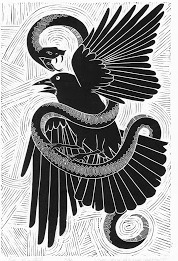
There is an Aesop Fable entitled the "The Crow and the Serpent" which I believe illustrates the statement made by His Holiness:  A crow in great want of food saw a Serpent asleep in a sunny nook, and flying down, greedily seized him. The Serpent, turning about, bit the Crow with a mortal wound. In the agony of death, the bird exclaimed: “O unhappy me! who have found in that which I deemed a happy windfall the source of my destruction.”

'I have found in that which I deemed a happy windfall the source of my destruction."  How often has this been true for us individually and for the entire world?  How often have we told ourselves if I can just get that particular job, buy that house or car, marry that person, make this amount of money, then I will be fulfilled and happy.  But when we actually achieve these goals, we far too often find that not only are we not fulfilled, but these very things we worked so hard to achieve are destroying our lives.   How many times have political leaders, and most certainly all dictators, come into power promising to be our saviors and in reality turned out to be the ones who cause misery and suffering?  All addictions - from drugs and alcohol to work or even a personal relationship - start out as pleasurable and something that will bring deep joy and meaning to our lives, and end up instead wreaking great havoc.

So is there anything in this world that will not become the "source of our destruction"?  This is in essence the theme of Pope Benedict's talk on November 21 in Rome when he continued in his series regarding the Year of Faith.  Pope Benedict explains to us that "without God, in fact, man loses himself."  The Holy Father shows that in order for anything in this life to be successful, it must be centered around faith, which is our relationship with God.  Anytime our lives are not centered on our Creator, we are walking a destructive path.  As the Pope has explained in earlier talks, it is through faith that we have a relationship with God, but it is a relationship that can only be initiated by God.  Faith is a gift we receive from our Creator and not something we can manufacture on our own.  This makes us completely dependent upon our merciful God, who always stands ready to pour His Love out upon us.  Our Lord told us, as recorded in Matthew 11:28-30:
Come to me, all you that labour, and are burdened, and I will refresh you. Take up my yoke upon you, and learn of me, because I am meek, and humble of heart: and you shall find rest to your souls. For my yoke is sweet and my burden light.
The Holy Father began his November 21 talk by describing the joy, liberation and peace that comes from believing in and communicating our faith.  Is is faith that "enhances, refines and elevates what is true, good and beautiful in man."  It is only through faith - an encounter with the Great God - that "man comes to know who God is and, in knowing him, discovers himself, his origin, his destiny, the greatness and dignity of human life".  Rodney King gave us the famous question, "Why can't we all just get along?"  The simple answer is that unless God is at the central core of our lives, nothing will work:
We go forward in this Year of Faith, bearing in our hearts the hope of rediscovering how much joy there is in believing and of finding the enthusiasm to communicate to all the truths of the faith. These truths are not a simple message about God, a piece of information about Him. Instead, they express the event of God's encounter with men, a salvific and liberating event, that fulfills the most profound aspirations of man, his desires for peace, brotherhood and love. Faith leads to discover that the encounter with God enhances, refines and elevates what is true, good and beautiful in man. It thus happens that, while God reveals himself and lets himself be known, man comes to know who God is and, in knowing him, discovers himself, his origin, his destiny, the greatness and dignity of human life.


The Vicar of Christ explains to us that Faith is not just a detached part of our lives but "an authentic knowledge of God involving the whole human person".  Faith is "the knowledge of God-Love", and it is through the love of God that "we overcome the horizons of our selfishness and open ourselves to the true values of life." Pope Benedict XVI also tells us that knowledge of God through faith is not just an intellectual exercise, not just another philosophy to explore, but faith is vital in our lives, as vital to our spiritual lives as air is to sustaining us physically. Faith "makes one see, it opens the eyes, allowing one to know all of reality, beyond the narrow perspectives of individualism and subjectivism that disorient consciences."  Faith is not just an exercise in intellectual gymnastics, but the very basis of our existence:
Faith allows an authentic knowledge of God involving the whole human person: it is a "knowing", a knowledge that gives flavor to life, a new taste to existence, a joyful way of being to the world. Faith is expressed in the gift of self to others, in the fraternity that creates solidarity, capable of loving, defeating the loneliness that makes us sad. This knowledge of God through faith is therefore not only intellectual, but vital. It is the knowledge of God-Love, thanks to his own love. The love of God thus makes one see, it opens the eyes, allowing one to know all of reality, beyond the narrow perspectives of individualism and subjectivism that disorient consciences. The knowledge of God is, therefore, an experience of faith and implies, at the same time, an intellectual and moral way: deeply touched by the presence of the Spirit of Jesus in us, we overcome the horizons of our selfishness and open ourselves to the true values ​​of life.
One of the great mysteries of life is bird migration
The Pope now explains what he calls the "reasonableness" of faith.  As the Holy Father explains, faith is never "against reason."  Faith is never about believing in absurdity.  "God, in fact, is not absurd; if anything He is a mystery."  There are many things in life that are a mystery.  Life itself is a mystery.  How does a human being start as a tiny egg the size of the period at the end of a sentence and grow to be a living, breathing human being?  How does a bird travel thousands of miles to a place he has never been before? We are surrounded by mysteries that we cannot explain.  The greatest mystery of all is how God can change a sinful human being completely cut off from Him into a perfect, sinless saint.  Pope Benedict also explains, as St. John of the Cross did in "Dark Night of the Soul" that often it seems that the closer we become to God, the more darkness we are in, which both St. John of the Cross and Pope Benedict XVI compare to looking directly at the bright sun and being blinded by it.  It may seem like we are in darkness but in truth we are in the brilliant light of God:
Today I want to focus on the reasonableness of faith in God. The Catholic tradition has from the beginning rejected fideism, which is the will to believe against reason. Credo quia absurdum (I believe because it is absurd) is not a formula that interprets the Catholic faith. God, in fact, is not absurd; if anything, He is mystery. Mystery, in turn, is not irrational, but the overabundance of sense, of meaning, of truth. If, when looking at the Mystery, one's reason sees darkness, it is not because there is no light in the mystery, but rather because there is too much of it. Just as when a man turns his eyes to look directly at the sun, he sees only darkness; but who would say that the sun is not bright? On the contrary, it is the source of light. Faith allows us to look upon the "sun" that is God, because it is a welcoming of his revelation in history and, so to speak, truly receives all the brightness of the mystery of God, recognizing the great miracle: God has approached man and has offered himself to be known by man, deigning to stoop the creaturely limits of his reason (cf. Vatican Council II, Dogmatic Constitution Dei Verbum, 13).
Just as the brilliance of the sun can physically blind us,
so the brilliance of God can seem to spiritually blind us
Pope Benedict XVI goes on to explain that not only does faith never go against reason, faith actually "opens new horizons for [reason], immeasurable and infinite."  Many accuse those with strong faith of being closed to learning and growing.  As Pope Benedict XVI says, "The exact opposite is true, as the great masters of the Catholic tradition have shown."  Faith does not mean turning our brain off.  In fact, Pope Benedict tells us that "Intellect and faith are not strangers or antagonists before divine Revelation; rather, both are conditions for understanding its meaning, to receive its authentic message, approaching the threshold of the mystery."  In fact, "new fruitful vitality comes to rational human thought from the ingrafting of the principles and truths of the Christian faith."  Faith is about constantly learning and growing and expanding ourselves, never being content with our spiritual state in life:
At the same time, God, with his grace, enlightens reason, opens new horizons for it, immeasurable and infinite. For this reason, faith is a strong incentive to seek always, to never stop and never grow quiet in the inexhaustible discovery of the truth and of reality. The prejudice of some modern thinkers is false, according to which human reason would be as if blocked by the dogmas of faith. The exact opposite is true, as the great masters of the Catholic tradition have shown. St. Augustine, before his conversion, sought the truth restlessly in all the available philosophies, finding them all unsatisfactory. His painstaking rational search was for him a significant pedagogy for the encounter with the Truth of Christ. When he says, "believe, in order to understand, and understand, the better to believe" (Sermons, 43, 9: PL 38, 258), it is as if he were recounting his own life experience. Intellect and faith are not strangers or antagonists before divine Revelation; rather, both are conditions for understanding its meaning, to receive its authentic message, approaching the threshold of the mystery.
St. Augustine, along with many other Christian authors, witnesses to a faith exercised through the use of reason; he thinks and invites us to think. Following in his wake, St. Anselm will say in his Proslogion that the Catholic faith is fides quaerensintellectum [rough translation:  to seek to understand], where the search for understanding is an act within belief itself. It will be especially St. Thomas Aquinas - thanks to this tradition - who will confront the reason of the philosophers, showing how much new fruitful vitality comes to rational human thought from the ingrafting of the principles and truths of the Christian faith.
Isaiah 1:18
The Holy Father flatly states:  "The Catholic faith is therefore reasonable and also nourishes confidence in human reason."  In fact, we cannot know truth without faith and reason together:  "In the irresistible desire for truth, only a harmonious relationship between faith and reason is the right path that leads to God and the fulfillment of self."  In fact, faith must be combined with reason to bring us to God.  It is never a matter of faith or reason but faith and reason:   "In the irresistible desire for truth, only a harmonious relationship between faith and reason is the right path that leads to God and the fulfillment of self."
The Catholic faith is therefore reasonable and also nourishes confidence in human reason. The First Vatican Council, in its Dogmatic Constitution Dei Filius, affirmed that reason is able to know God’s existence with certainty through the way of creation, while there belongs to faith alone the possibility of knowing "easily, with absolute certainty and without error "(DS 3005) the truths concerning God, in the light of grace. The knowledge of the faith, furthermore, is not opposed to right reason. Blessed Pope John Paul II, in fact, in the Encyclical Fides et ratio, summed it up thus: "human reason is neither annulled nor debased in assenting to the contents of faith, which are in any case attained by way of free and informed choice"(no. 43). In the irresistible desire for truth, only a harmonious relationship between faith and reason is the right path that leads to God and the fulfillment of self.
Alexander the Great who conquered many nations
The images of heroes in our world are those who are strong and mighty, able to vanquish all of their enemies with their cunning, skill and strength.  Yet, when the God who created the universe came to this earth as a man to die for our sins and to vanquish the Enemy, he did so not with mighty armies or cunning strength, but with love and humility, dying the disgraceful death of a criminal on a cross, so tortured and beaten that he barely looked human.  In this physically wretched state, there was not up to that time and has not since been a more resounding victory than this - the victory over sin and death.  This goes against all human reason and wisdom.  As the Holy Father says:  "God saved the world not with an act of power, but through the humiliation of his only Son: according to human standards, the unusual manner used by God clashes with the demands of Greek wisdom. Yet, the cross of Christ has its logic, which St. Paul calls: ho logos toustaurou, "the word of the cross" (1 Cor 1:18)."
The saving power of Jesus Christ
This doctrine can be easily recognized throughout the New Testament. St. Paul, writing to the Christians of Corinth, says: "For Jews demand signs and Greeks seek wisdom, but we preach Christ crucified: a stumbling block to Jews and foolishness to the Gentiles" (1 Cor 1:22-23). In fact, God saved the world not with an act of power, but through the humiliation of his only Son: according to human standards, the unusual manner used by God clashes with the demands of Greek wisdom. Yet, the cross of Christ has its logic, which St. Paul calls: ho logos toustaurou, "the word of the cross" (1 Cor 1:18). The term 'logos' means both reason and word and, if it alludes to the word, it is because it expresses verbally what reason elaborates. Thus, Paul sees in the cross not an irrational event, but a salvific fact that has its own reasonableness, which can be recognized in the light of faith.
The Holy Father reminds us that we have no excuse to deny God as He has made Himself known through His creation. "Since the creation of the world, God's invisible perfections - his eternal power and divine nature - have been clearly seen, being understood from the things he has made."
At the same time, he has such confidence in human reason that he wonders at the fact that many, while seeing the beauty of the works wrought by God, are determined not to believe in Him: "In fact", he writes in his Letter to the Romans, "since the creation of the world, God's invisible perfections - his eternal power and divine nature - have been clearly seen, being understood from the things he has made "(1:20). In this way, St. Peter, too, exhorts Christians in the Diaspora to worship "the Lord Christ in your hearts, always ready to respond to anyone who asks you for an account of the hope that is in you" (1 Pet 3:15). In a climate of persecution and of a strong need to witness to the faith, believers are asked to justify their adherence to the word of the Gospel with well-grounded reasons; to give the reasons for our hope.
Pope Benedict now speaks of the "virtuous relationship between science and faith."  This goes against the beliefs of most people who feel that science is all about facts and faith is based on emotions.  The Holy Father tells us that not only can faith and science come together, but it can be a "virtuous relationship".  He encourages studies that will improve man's life and bring him to a greater knowledge of the creation "not to exploit it foolishly, but to guard it and make it inhabitable."  Rather than condemning true science, the Pope encourages it:  "If science is a valuable ally of the faith for understanding God's plan in the universe, faith permits scientific progress to occur always for the good and the truth of man, while staying true to this same plan."
On these premises regarding the fruitful link between understanding and believing, rests the virtuous relationship between science and faith. Scientific research always leads to the knowledge of new truths about man and the cosmos. We see this. The true good of humanity, accessible in faith, opens the horizon in which its journey of discovery must move. Those studies, for instance, should therefore be encouraged, which are placed at the service of life and which aim to eradicate disease. Also important are the investigations to discover the secrets of our planet and the universe, in the knowledge that man is at the summit of creation not to exploit it foolishly, but to guard it and make it inhabitable. So faith, truly lived, is not in conflict with science; rather, it cooperates with it, offering basic criteria that promote the good of all, asking science to give up only those attempts which - in opposition to God's original plan - can produce effects that turn against man himself. For this reason, too, it is reasonable to believe: if science is a valuable ally of the faith for understanding God's plan in the universe, faith permits scientific progress to occur always for the good and the truth of man, while staying true to this same plan.
The Holy Father reminds us of this statement of the Catechism of the Catholic Church:  "God, who alone 'made heaven and earth' (Ps 115:15), can alone impart true knowledge of every created thing in a relation to himself (no. 216)."  We can never have complete knowledge of anything without faith, which is a living relationship with our Creator.  To search for any truth without the revelation of God is the source of destruction.
That is why it is crucial for people to open themselves to faith and to know God and his plan of salvation in Jesus Christ. In the Gospel, a new humanism is inaugurated, an authentic "grammar" of man and of all reality. The Catechism of the Catholic Church affirms: "God's truth is his wisdom, which commands the whole created order and governs the world. God, who alone "made heaven and earth" (Ps 115:15), can alone impart true knowledge of every created thing in a relation to himself"(no. 216).
As  Hosea 4:6 tells us, we are destroyed for lack of knowledge.  Certainly we have much scientific and technical knowledge, but without a relationship with our Creator, that knowledge actually becomes the source of our destruction, just as in the fable of the crow and Serpent.  This is why the Pope says in this talk that our very existence is at stake.  This is why evangelization is so important.  We who have the knowledge of life are obligated to bring that knowledge to the world:
We are confident then that our commitment to the evangelization will help give new centrality to the Gospel in the lives of many men and women of our time. Let us pray that all find in Christ the meaning of life and the foundation of true freedom: without God, in fact, man loses himself. The testimonies of those who have gone before us and have dedicated their lives to the Gospel confirm it forever. It is reasonable to believe, our existence is at stake. It is worth spending oneself for Christ, He alone satisfies the desires of truth and of goodness rooted in the soul of every man: now, in the time that passes, and in the endless day of blessed Eternity. Thank you.
These talks by the Holy Father are a great source of light in our increasingly dark and dying world.  The world is daily distancing itself more and more from our Creator and cutting itself off from the only true source of Life.  The Catholic Church, the Mystical Body of Christ, the only Church founded by Jesus Christ who died and rose to save the world from darkness and death, must not shrink from bringing this saving message to suffering mankind, or their blood will be on our hands.
It is worth spending oneself for Christ, He alone satisfies the desires of truth and of goodness rooted in the soul of every man: now, in the time that passes, and in the endless day of blessed Eternity.


Thursday, July 19, 2012

Persecution and Martyrdom of the Catholic Church in America

I have stated on this blog more than once that the Catholic Church in America is headed for some very tumultuous times of persecution, and I feel very firmly that the Church itself will be forced to go underground as it will be outlawed by the United States government.  Michael Voris, formerly realcatholictv.com and now churchmilitant.tv, just did an excellent Vortex episode in which he spells out the dangers to the Catholic Church in America in great detail and why we are headed there. Below is the video from the Vortex.  I have also copied the script below, which I think bears a close reading (with my own comments, of course)


Catholic or Patriot?

vort-2012-07-19  
Hello everyone and welcome to The Vortex where lies and falsehoods are trapped and exposed. I’m Michael Voris coming to you the heart of Catholicism .. Rome .. St. Peter’s Square.  
All over the world .. at least the western world .. there is a growing unease that soon and very soon .. Catholics may have to make a choice between their Catholic faith and their country. Between their faith and their patriotism. As Providence plays out .. it would appear that center stage of this tragedy is the United States of America. All the stars are aligning against the Church and don’t let lawsuits filed by the bishops and Catholic colleges fool you.


The clouds are gathering quickly and darkening for the Church in the US. The American civilization has launched a culture war against faithful Catholics .. just as Otto von Bismarck did in the mid to late 19th century in Germany .. and the French government in the 18th century and the English government did in the 16th and 17th centuries. Martyrs were born of those oppressive and tyrannical governments. And martyrs will be born of the American government’s tyranny.  [This is not hyperbole.  This is real.  The Church will be labeled by our government as an evil organization that promotes hatred and bigotry, and there will be violence against Catholics.  And sad to say, some of that very persecution will come from those who call themselves "Catholic."]

This is a burned out church in Indonesia.
Is this what we will be seeing soon in the USA?
When will Catholics wake up and realize that what is working behind the scenes is a battle between Heaven and Hell .. between St. Michael and Lucifer. [And might I add, between Satan and the Queen of the angels and of heaven and earth - Mary, who is Satan's most hated enemy.]  Satan .. being defeated in eternity .. still retains his angelic powers to wage war against the Church in time. And until time comes to an end and human history has played itself out .. Satan will continue to assail the Church .. personally established by Our Blessed Lord on St. Peter .. whom he renamed .. Rock.  

Mary crushing the serpent
Once again .. the bastard destroyer has seized hold of the powers of the state and is bringing them to bear on the faithful. [Take note - Satan is waging war on the faithful, not on "faux" Catholics.]  There are still unresolved matters left to be worked out .. details really .. in Obama’s diabolical health care law. But at the White House .. Obama and Catholic traitors are in full scale advance .. putting in place their view of the world in which the Catholic Church has no part .. the authentic Catholic Church that is. One day .. and soon .. Catholics in America .. who have been lulled into a false notion that you can be both a good American and a good Catholic .. are going to have to choose between their Church and their country.

We have reached this point for many reasons .. but one that cannot be overlooked is how Church leadership rushed headlong and continues to do so .. into a vision that a government which promotes a vast array of evil can AT THE SAME TIME .. be reasoned with to reach consensus on other questions of morality.  
When a man named Obama stood at center stage of the US Catholic world in May 2009 and declared to raucous cheers from Notre Dame graduates, parents and faculty .. that common ground needed to be reached on questions of abortion and freedom of conscience .. he was lying through his teeth and he knew it. He used the softened up Catholic mind .. the Church of Nice .. to present a soft side of evil .. a side designed to be swallowed hook line and sinker by spineless and delusional leaders who TO THIS DAY .. still actively promote some of his legislation .. suffering under an ignorant and less than fully informed understanding of Catholic social doctrine.  [I think that Michael Voris is actually being kind here, giving the benefit of the doubt to these leaders that they actually don't know they are making a pact with the devil.  I'm not sure I would be that kind.]

These enemies of the faith .. like Obama .. but certainly not just him .. Pelosi .. Biden Kennedy and hundreds of others come to mind .. these enemies of the faith have been allowed to carry out their assaults against the common good of the culture PRECISELY because so many Catholic bishops and lay staff around the country for decades now have refused to stare down evil and call it out for what it is. They have refused to decry a law because it is intrinsically evil .. meaning rotten to the core JUST BECAUSE of WHAT IT IS.

Even now .. this ridiculous idea of challenging the health care contraception mandate because it infringes on religious freedom is patently absurd. The law is evil .. NOT JUST UNCONSTITUTIONAL. Who cares if it’s unconstitutional?!? It’s evil because it promotes an evil; namely contraception. That’s why the law is bad – not because it may (OR MAY NOT) violate some arcane clause in a 200+ year old document that only means what a majority of nine judges say it means.  [The Fortnight of Freedom was wrong and even laughable because it was about the wrong issue.  As Michael Voris says, this is not about freedom or the constitution, this is about good versus evil.]

This obfuscates the issue. It's not about
freedom - this is about good versus evil,
and the bishops will never win until they admit this fact.
Here’s the reality .. whether most bishops say it clearly or not.  American Catholics will soon be facing a decision whether to cooperate with the state or stand by their faith and pay the consequences. We have come to this because too many leaders have betrayed their high calling to preach unabashedly and untiringly the unalterable truths of Christ. And even now .. they still refuse to make pubic profession of their full guilt and do something about it.  [This is one of the most important statements Catholics today, especially in the United States, can hear.  We must be prepared to literally lay down our lives for what we believe in, because that time is coming, and very soon.]

So it is now up to the laity .. the few who may still have some touchstone to the faith to stand before judges and courts and bureaucrats and pay the price for Christ. Catholics in America may soon have to discover another way to live in the land of the free and the home of the brave .. something America has not been since it unleashed the slaughter of tens of millions of pre-born fellow citizens. Make no mistake .. the diabolical has control of the halls of government and is waiting for the opportunity to reveal itself fully.

At the rate things are progressing .. we shouldn’t have to wait too long. Its time to prepare ourselves my fellow Catholics. Immerse yourself in the faith, the sacraments, mind and soul so that when your time comes to choose .. you will choose the way of martyrdom .. however it comes to you and me. GOD Love you, I’m Michael Voris

We are living in the most serious of times, when it is not only a matter of physical life and death, but of even more importance, our eternity.  As Michael Voris said, we need to immerse ourselves in the Catholic faith, partake of the sacraments as often as possible, LEARN what our faith teaches so we can stand up to those who wish to destroy us.  The Catholic Church is the ark of salvation to the world, we are the only place that truth and life can be found.  We must turn to our Lord and to our Lady for the strength to survive the evil assault that we are now experiencing, and the much greater assault that awaits us in the near future. 

Sunday, April 8, 2012

Easter Vigil Message: The Holy Father Warns Of Great Peril To The World

Christ Rising From The Dead
Today is Easter Sunday.  On Good Friday we commemorated the most solemn day of the Christian calendar, the day on which our Lord died on the cross for our salvation.  Today, Easter, we celebrate the most joyous day, for today Christ is risen and death is conquered.  Christ has opened the door to heaven for all mankind, and beckons us to follow Him.  Darkness and destruction have been lifted from the earth.  Our Lord has redeemed us, bought us back from the evil one.  We rejoice with the angels in heaven today.  As the Apostle Paul wrote in I Corinthians 15: "O death, where is thy victory? O death, where is thy sting?"  Our Lord has conquered death not through violence or anger or hate, but through love.  He has given himself for us, and now we must give ourselves to him and to each other. 

But as we look around us, it certainly doesn't seem that anything has changed.  If anything, the world seems to be descending into more and more evil.  Man's inhumanity to man is reaching new heights, or should I say, depths.  The evil one seems to be the one who is winning. 


Our Holy Father, as usual, explains this far better than I can even begin to.  Here is his Easter Vigil message:

Dear Brothers and Sisters,
Easter is the feast of the new creation. Jesus is risen and dies no more. He has opened the door to a new life, one that no longer knows illness and death. He has taken mankind up into God himself. “Flesh and blood cannot inherit the kingdom of God”, as Saint Paul says in the First Letter to the Corinthians (15:50). On the subject of Christ’s resurrection and our resurrection, the Church writer Tertullian in the third century was bold enough to write: “Rest assured, flesh and blood, through Christ you have gained your place in heaven and in the Kingdom of God” (CCL II, 994). A new dimension has opened up for mankind. Creation has become greater and broader.
Easter Day ushers in a new creation, but that is precisely why the Church starts the liturgy on this day with the old creation, so that we can learn to understand the new one aright. At the beginning of the Liturgy of the Word on Easter night, then, comes the account of the creation of the world. Two things are particularly important here in connection with this liturgy. On the one hand, creation is presented as a whole that includes the phenomenon of time. The seven days are an image of completeness, unfolding in time. They are ordered towards the seventh day, the day of the freedom of all creatures for God and for one another. Creation is therefore directed towards the coming together of God and his creatures; it exists so as to open up a space for the response to God’s great glory, an encounter between love and freedom. On the other hand, what the Church hears on Easter night is above all the first element of the creation account: “God said, ‘let there be light!’” (Gen 1:3). The creation account begins symbolically with the creation of light. The sun and the moon are created only on the fourth day. The creation account calls them lights, set by God in the firmament of heaven. In this way he deliberately takes away the divine character that the great religions had assigned to them. No, they are not gods. They are shining bodies created by the one God. But they are preceded by the light through which God’s glory is reflected in the essence of the created being.
What is the creation account saying here? Light makes life possible. It makes encounter possible. It makes communication possible. It makes knowledge, access to reality and to truth, possible. And insofar as it makes knowledge possible, it makes freedom and progress possible. Evil hides. Light, then, is also an expression of the good that both is and creates brightness. It is daylight, which makes it possible for us to act. To say that God created light means that God created the world as a space for knowledge and truth, as a space for encounter and freedom, as a space for good and for love. Matter is fundamentally good, being itself is good. And evil does not come from God-made being, rather, it comes into existence only through denial.   It is a “no”.  [St. Augustine explained that good can exist without evil, but there can be no evil unless there is good, because evil is the absence of good, or as the Holy Father explains, the absence of light, the True Light that is Jesus Christ.]

At Easter, on the morning of the first day of the week, God said once again: “Let there be light”. The night on the Mount of Olives, the solar eclipse of Jesus’ passion and death, the night of the grave had all passed. Now it is the first day once again – creation is beginning anew. “Let there be light”, says God, “and there was light”: Jesus rises from the grave. Life is stronger than death. Good is stronger than evil. Love is stronger than hate. Truth is stronger than lies. [This is the message of Easter - good has triumphed over evil.  Evil has been banished, and all those who cling to evil will be banished with it.  Come out of the darkness into the Light, the True Light of Jesus Christ.]  The darkness of the previous days is driven away the moment Jesus rises from the grave and himself becomes God’s pure light. But this applies not only to him, not only to the darkness of those days. [John 1:9 says that Jesus is "the true light, which enlighteneth every man that cometh into this world."] With the resurrection of Jesus, light itself is created anew. He draws all of us after him into the new light of the resurrection and he conquers all darkness. He is God’s new day, new for all of us.

But how is this to come about? How does all this affect us so that instead of remaining word it becomes a reality that draws us in? Through the sacrament of baptism and the profession of faith, the Lord has built a bridge across to us, through which the new day reaches us. The Lord says to the newly-baptized: Fiat lux – let there be light. God’s new day – the day of indestructible life, comes also to us. Christ takes you by the hand. From now on you are held by him and walk with him into the light, into real life. For this reason the early Church called baptism photismos – illumination.

Why was this? [Here the Holy Father gets to the heart of the cause of evil in the world, that fact that mankind rejects the light of Christ and chooses instead the darkness of his own understanding.]  The darkness that poses a real threat to mankind, after all, is the fact that he can see and investigate tangible material things, but cannot see where the world is going or whence it comes, where our own life is going, what is good and what is evil. The darkness enshrouding God and obscuring values is the real threat to our existence and to the world in general.  [The Holy Father is giving us a dire warning here, that because of the spiritual darkness we have chosen, the continued physical existence of our world is in peril.]  If God and moral values, the difference between good and evil, remain in darkness, then all other “lights”, that put such incredible technical feats within our reach, are not only progress but also dangers that put us and the world at risk. Today we can illuminate our cities so brightly that the stars of the sky are no longer visible. Is this not an image of the problems caused by our version of enlightenment? With regard to material things, our knowledge and our technical accomplishments are legion, but what reaches beyond, the things of God and the question of good, we can no longer identify. Faith, then, which reveals God’s light to us, is the true enlightenment, enabling God’s light to break into our world, opening our eyes to the true light.  [All of the great creations of mankind mean nothing without faith and belief in his Creator, and in fact, those manmade creations will actually lead to our destruction.]

Dear friends, as I conclude, I would like to add one more thought about light and illumination. On Easter night, the night of the new creation, the Church presents the mystery of light using a unique and very humble symbol: the Paschal candle. This is a light that lives from sacrifice. The candle shines inasmuch as it is burnt up. It gives light, inasmuch as it gives itself. Thus the Church presents most beautifully the paschal mystery of Christ, who gives himself and so bestows the great light. Secondly, we should remember that the light of the candle is a fire. Fire is the power that shapes the world, the force of transformation. And fire gives warmth. Here too the mystery of Christ is made newly visible. Christ, the light, is fire, flame, burning up evil and so reshaping both the world and ourselves. “Whoever is close to me is close to the fire,” as Jesus is reported by Origen to have said. And this fire is both heat and light: not a cold light, but one through which God’s warmth and goodness reach down to us.
The great hymn of the Exsultet, which the deacon sings at the beginning of the Easter liturgy, points us quite gently towards a further aspect. It reminds us that this object, the candle, has its origin in the work of bees. So the whole of creation plays its part. In the candle, creation becomes a bearer of light. But in the mind of the Fathers, the candle also in some sense contains a silent reference to the Church,. The cooperation of the living community of believers in the Church in some way resembles the activity of bees. It builds up the community of light. So the candle serves as a summons to us to become involved in the community of the Church, whose raison d’être is to let the light of Christ shine upon the world. 
Let us pray to the Lord at this time that he may grant us to experience the joy of his light; let us pray that we ourselves may become bearers of his light, and that through the Church, Christ’s radiant face may enter our world (cf. LG 1). Amen
Pope Benedict XVI never ceases to amaze me with the depth of his thought and clarity of vision.  He makes his statements softly and without fanfare, and we must listen carefully to what he says.   He is giving us a very urgent message here which has relevance to every man, woman and child on this earth.  It truly is a message of life and death, of physical life and death, and of even far more importance, spiritual life and death.   The world ignores this message at its own peril.


Tuesday, February 28, 2012

After-birth abortion: why should the baby live?


A "Potential" Person With
No Moral Right To Life

Human beings never seem to stop degenerating.  Just when we've hit what we think is an old time low, we go even further into evil.  One would think that the legal killing of babies in the womb is about the lowest we can go.  Ah no, now the Journal of Medical Ethics is aruging to allow the killing of newborn babies.  Satan continues to demand human sacrifice, and we continue to obey his commands.  I would like to post the actual paper here, but it costs $30 to view it for one day, and it is also copyrighted.  So I have posted an article from infowars.com regarding this. 

Our Lady of the Rosary, pray for us. 


Ethicists Argue Killing Newborn Babies Should Be Allowed


Shocking reminder that eugenicist beliefs underpin medical establishment


Paul Joseph Watson
Infowars.com
Tuesday, February 28, 2012

A paper published in the Journal of Medical Ethics argues that abortion should be extended to make the killing of newborn babies permissible, even if the baby is perfectly healthy, in a shocking example of how the medical establishment is still dominated by a eugenicist mindset.
The paper is authored by Alberto Giubilini of Monash University in Melbourne and Francesca Minerva at the Centre for Applied Philosophy and Public Ethics at the University of Melbourne.
The authors argue that “both fetuses and newborns do not have the same moral status as actual persons,” and that because abortion is allowed even when there is no problem with the fetus’ health, “killing a newborn should be permissible in all the cases where abortion is, including cases where the newborn is not disabled.”
“The fact that both are potential persons is morally irrelevant,” the authors claim, arguing that adoption is not a reasonable counter-argument because the parents of the baby might be economically or psychologically burdened the process and the mother may “suffer psychological distress”. How the mother could not also “suffer psychological distress” by having her newborn baby killed is not explained.
“Merely being human is not in itself a reason for ascribing someone a right to life. Indeed, many humans are not considered subjects of a right to life: spare embryos where research on embryo stem cells is permitted, fetuses where abortion is permitted, criminals where capital punishment is legal,” the authors write.
The practice of infanticide has its origins in barbaric eras of ancient history, but it is still common is many areas of the world today, including China where the one child policy allied with the social pressure to have boys has resulted in a massive imbalance in the population. Studies have found that 40 million girls are ‘missing’ in China as a result of gender-selective abortion and infanticide. In India, there are 50 million less females for the same reasons.
In Pakistan, over 1000 babies a year are the victims of infanticide, which is rarely punished.
Matthew Archbold of the National Catholic Register explains how the legalization of infanticide, killing newborn babies, is the logical conclusion of the starting point of the argument, which is that the fetus is not human and has no right to live.

“The second we allow ourselves to become the arbiters of who is human and who isn’t, this is the calamitous yet inevitable end. Once you say all human life is not sacred, the rest is just drawing random lines in the sand,” he writes.
Respected bioethicist Wesley J. Smith notes that the debate surrounding “the right to dehydrate the persistently unconscious,” which eventually led to events like the Terri Schiavo case, started with articles in bioethics and medical journals.
“Or to put it another way, too often bioethics, isn’t. On the other hand, to be fair, the ancient Romans exposed inconvenient infants on hills. These authors may want to take us back to those crass values, but I assume they would urge a quicker death,” he writes.
Alexanderhiggins.com also has a very good post on this subject, taking from different sources. 

A paper just published in the Journal of Medical Ethics says that parents should have the right to kill their newborn infants, because infants are not people.


A paper in the The Journal of Medical Ethics, an international peer-reviewed journal for health professionals and researchers in medical ethics, argues that murdering newborn infants should be legalized.

The rational? “Infants are not people”.

After-birth abortion: why should the baby live?
Abstract
Abortion is largely accepted even for reasons that do not have anything to do with the fetus’ health. By showing that (1) both fetuses and newborns do not have the same moral status as actual persons, (2) the fact that both are potential persons is morally irrelevant and (3) adoption is not always in the best interest of actual people, the authors argue that what we call ‘after-birth abortion’ (killing a newborn) should be permissible in all the cases where abortion is, including cases where the newborn is not disabled.
By Alberto Giubilini1, 2and Francesca Minerva3,4Author Affiliations
  1. Department of Philosophy, University of Milan, Milan, Italy
  2. Centre for Human Bioethics, Monash University, Melbourne, Victoria, Australia
  3. Centre for Applied Philosophy and Public Ethics, University of Melbourne, Melbourne, Victoria, Australia
  4. Oxford Uehiro Centre for Practical Ethics, Oxford University, Oxford, UK
Correspondence to Dr Francesca Minerva, CAPPE, University of Melbourne, Melbourne, VIC 3010, Australia; mailto:francesca.minerva@unimelb.edu.au
Contributors AG and FM contributed equally to the manuscript.
Source: Journal of Medical Ethics
Justifying the Murder of Infants
The authors of the study, Alberto Giubilini with Monash University in Melbourne and Francesca Minerva at the Centre for Applied Philosophy and Public Ethics at the University of Melbourne argue that they “prefer the term “after-birth abortion” as opposed to “infanticide,” as the latter conjures up images of a child rather than a “fetus,” which does not have the moral equivalent to life than a baby. [As William Shakespeare said, a rose by any other name . . .] The After-birth abortion would be justified in cases where, “the newborn would be putting the well-being of the family at risk.” They say, “Both a fetus and a newborn certainly are human beings and potential persons, but neither is a ‘person’ in the sense of ‘subject of a moral right to life.’ ”
To easier swallow the idea that a child is a “fetus,” those that support killing a child are skilled with their use of language to easier digest the idea of abortion. Clearly the authors of this study have the same idea with regard to verbiage. Recently, Joy Behar had a minor slip up in the accepted verbiage, while referring to a pending law in Virginia that would require a mother to get an ultrasound before committing to an abortion. Ms. Behar said that forcing a mother to “see the child, er, infant, er fetus, er ‘whatever it is’ before getting an abortion is downright evil!”  [Killing the "child, er, infant, er fetus er ‘whatever it is’" is not evil, but looking at it before you kill it is evil.]
[...]
Source: Gather News
Ethicists Argue in Favor of ‘After-Birth Abortions‘ as Newborns ’Are Not Persons’
[...]
The two are quick to note that they prefer the term “after-birth abortion“ as opposed to ”infanticide.” Why? Because it “[emphasizes] that the moral status of the individual killed is comparable with that of a fetus (on which ‘abortions’ in the traditional sense are performed) rather than to that of a child.” The authors also do not agree with the term euthanasia for this practice as the best interest of the person who would be killed is not necessarily the primary reason his or her life is being terminated. In other words, it may be in the parents’ best interest to terminate the life, not the newborns.
The circumstances, the authors state, where after-birth abortion should be considered acceptable include instances where the newborn would be putting the well-being of the family at risk, even if it had the potential for an “acceptable” life. The authors cite Downs Syndrome as an example, stating that while the quality of life of individuals with Downs is often reported as happy, “such children might be an unbearable burden on the family and on society as a whole, when the state economically provides for their care.”
[...]
This means a newborn whose family (or society) that could be socially, economically or psychologically burdened or damaged by the newborn should have the ability to seek out an after-birth abortion. They state that after-birth abortions are not preferable over early-term abortions of fetuses but should circumstances change with the family or the fetus in the womb, then they advocate that this option should be made available.
The authors go on to state that the moral status of a newborn is equivalent to a fetus in that it cannot be considered a person in the “morally relevant sense.” On this point, the authors write:
Both a fetus and a newborn certainly are human beings and potential persons, but neither is a ‘person’ in the sense of ‘subject of a moral right to life’. We take ‘person’ to mean an individual who is capable of attributing to her own existence some (at least) basic value such that being deprived of this existence represents a loss to her.  [Remember Candidate Obama's statement that stating when life begins was above his paygrade?  Well, I guess it's above everyone's "paygrade."  If we are allowed to progress far enough, the definition of a "person" will be anyone who can contribute to society and is not a burden on anyone else.  If we are unable to be "productive" members of society, and others must take care of us, then we will have no right to live.]
[...]
Merely being human is not in itself a reason for ascribing someone a right to life. [See above.]  Indeed, many humans are not considered subjects of a right to life [and who is it who makes the decision of "right to life"? The US Constitution said right to life is God given, but I guess that doesn't apply anymore]: spare embryos where research on embryo stem cells is permitted, fetuses where abortion is permitted, criminals where capital punishment is legal.  [An "embryo", a "fetus" and now a newborn baby are put on the same level as those who have committed heinous crimes.  A very telling comparison from those who view babies as nuisances and easily killed if they dare to interfere with our lives.]
Giubilini and Minerva believe that being able to understand the value of a different situation, which often depends on mental development, determines personhood. For example, being able to tell the difference between an undesirable situation and a desirable one. They note that fetuses and newborns are “potential persons.” The authors do acknowledge that a mother, who they cite as an example of a true person, can attribute “subjective” moral rights to the fetus or newborn, but they state this is only a projected moral status.
The authors counter the argument that these “potential persons” have the right to reach that potential by stating it is “over-ridden by the interests of actual people (parents, family, society) to pursue their own well-being because, as we have just argued, merely potential people cannot be harmed by not being brought into existence.”
And what about adoption? Giubilini and Minerva write that, as for the mother putting the child up for adoption, her emotional state should be considered as a trumping right. For instance, if she were to “suffer psychological distress” from giving up her child to someone else — they state that natural mothers can dream their child will return to them — then after-birth abortion should be considered an allowable alternative.  [Giving a child up for adoption can cause "psychological distress" because the mother might still "dream their child will return to them" but killing the child won't cause any stress whatsoever, according to the authors of this paper.]
[...]
Source:The Blaze
If there is any doubt about the existence of evil in this world, this should remove that doubt completely.  The only sanity to be found is with God and his true one, holy, catholic and apostolic Church.  Even with the Church, we must wade through it and constantly test the spirits, because evil has also infiltrated there, as I have shown many times on this blog.  You are either serving God or serving the devil.
Satan Resting on the Mountain
Surveying Humanity Doing His Bidding

Saturday, December 31, 2011

Thoughts At the End of 2011

As 2011 draws to a close, I find it interesting to look back on the year.  Let's take a look first of all at the country I call home - the United States of America.  Things were not good at the end of 2010 - high unemployment, people losing their homes, the dollar and the entire economy threatening to collapse, the survival of the family threatened with legalization of same sex marriage and general immorality, high abortion numbers, high numbers of kids failing in schools, threats of war everywhere - it just wasn't good.  But there was promise in the air - the nation had just elected large numbers of tea party candidates to the House of Representatives, and we were assured that things were going to change.  John Boehner, the new Speaker of the House, would stand up to Obama and turn this country around.  Good days were coming!

It is now 12 months later.  What has ensued during that time?  Well, we've been involved in yet another war - oops, I meant a "kinetic military action" in Libya.  President Obama didn't bother to get congressional approval for this "kinetic military action".  A few Republicans grumbled about that, but most didn't seem too upset and they certainly didn't do anything about it.  We were involved in overturning our long time ally in Egypt (very dangerous to be an ally of the United States - the US will turn on you every time); and we are now threatening to get involved with both Syria and Iran.  Hmmm, that doesn't sound too good. 


Related Posts  0